
Importance of Brand Communication: How It Shapes Strong & Memorable Brands
Importance of Brand Communication: How It Shapes Strong & Memorable Brands
In an era where consumers are bombarded with thousands of marketing messages daily, why do some brands stick in our minds while others fade into digital noise? The secret isn’t just a great product or a flashy logo; it’s the strategic marketing communication process that connects a business to its audience.
The importance of brand communication cannot be overstated. It is the bridge between a company’s internal identity and its external perception. When executed correctly, it transforms a business from a mere vendor into a trusted household name.
Understanding Communication and Branding
To build a brand that lasts, one must understand that communication and branding are two sides of the same coin. While branding defines who you are, communication is the act of sharing that identity with the world.
A professional brand communication strategist looks at the entire brand communication framework to ensure that every touchpoint from a social media post to a customer service call is aligned. Without a cohesive brand communication plan, your message becomes fragmented, leading to “brand dissonance” where customers receive conflicting signals about what you stand for.
Core Elements of Branding
Before you can communicate, you must establish the foundation. The elements of branding include:
1. Visual Identity:
This includes branding design, logos, and color palettes.
This includes branding design, logos, and color palettes.
2. Brand Voice:
Your unique brand communication style (e.g., professional, witty, or bold).
Your unique brand communication style (e.g., professional, witty, or bold).
3. Value Proposition:
What makes you different from the competition.
What makes you different from the competition.
Why Is Brand Communication Important?

1. It Builds Trust and Credibility
Trust is the currency of the modern economy. Effective brand communication humanizes a business. By being transparent about values through a well-structured brand communication process, a company creates a sense of reliability.
2. It Creates a Distinct Competitive Advantage
In crowded markets, brand management is the ultimate differentiator. It tells the story of why you do what you do. A strong brand strategy ensures that your unique selling points are highlighted consistently across all channels.
3. It Fosters Customer Loyalty
Through consistent storytelling and the right brand communication elements, brands like Apple or Nike move past being utility providers to becoming symbols of lifestyle and identity.
Navigating Challenges and Opportunities in Branding
The modern landscape presents a unique set of challenges and opportunities in branding.
The Challenges of Branding
Today, one of the biggest challenges of branding is the speed of information. A single communication mishap can go viral in minutes. Furthermore, maintaining a consistent brand communication strategy across dozens of digital platforms is a complex logistical task.
Modern Branding Opportunities
Conversely, branding opportunities have never been greater. Data-driven insights allow for a personalized brand communication style that speaks directly to individual consumer needs. Brands can now engage in real-time dialogue, turning a standard transaction into a long-term relationship.
How to Build a Brand Communication Plan
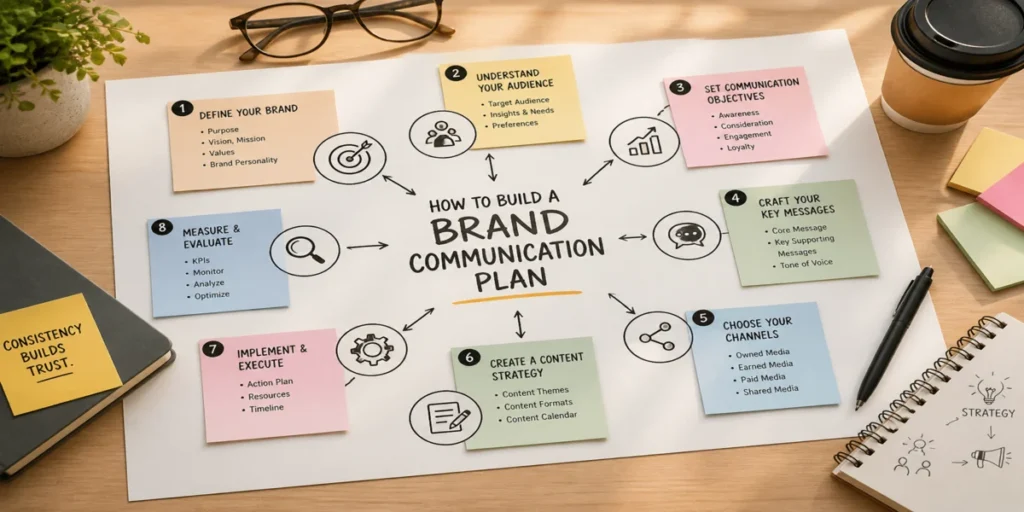
To effectively build a brand, you need a roadmap. A robust brand communication plan should include:
1. Audience Analysis:
Understanding who you are talking to.
Understanding who you are talking to.
2. Messaging Pillars:
The core truths you want to communicate.
The core truths you want to communicate.
3. Channel Strategy:
Choosing the right platforms (social, email, print) where your branding design can shine.
Choosing the right platforms (social, email, print) where your branding design can shine.
4. Feedback Loops:
Using brand management tools to listen to customer responses and adjust the brand communication framework accordingly.
Using brand management tools to listen to customer responses and adjust the brand communication framework accordingly.
The Role of Branding Design in Communication
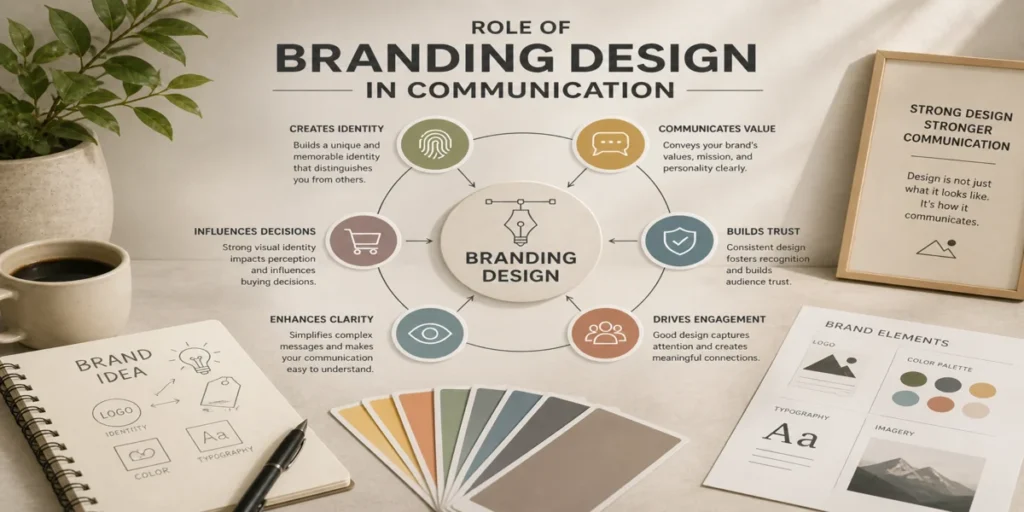
Branding design is the silent language of your business. It is one of the most vital elements of branding because it communicates values before a single word is read. High-quality design signals professionalism and attention to detail. When your visuals match your brand communication strategy, you create a seamless experience that reinforces consumer memory.
Measuring Success in the Marketing Communication Process

How do you know if your brand communication is working? A brand communication strategist monitors several KPIs:
1. Brand Awareness:
How many people recognize your elements of branding?
How many people recognize your elements of branding?
2. Sentiment Analysis:
Is the conversation surrounding your brand strategy positive?
Is the conversation surrounding your brand strategy positive?
3. Consistency Score:
How well does your brand communication style hold up across different departments?
How well does your brand communication style hold up across different departments?
Key Strategies for Brand Communication
Component | Strategic Action |
Brand Communication Process | Map every customer touchpoint to ensure message alignment. |
Brand Communication Elements | Audit your logo, tone, and imagery for visual consistency. |
Brand Communication Strategy | Define long-term goals and the "voice" of the company. |
Brand Management | Monitor the brand's health and reputation daily. |
Conclusion: The Long-Term Impact
The importance of brand communication is found in the “long game.” It is an investment in the brand’s equity. While products can be copied, a well-executed brand communication framework creates an intangible asset that competitors cannot easily replicate.
By prioritizing a clear brand communication strategy and mastering the marketing communication process, you aren’t just selling a product you are building a legacy. Whether you are a startup looking to build a brand from scratch or an established firm improving your brand management, the way you communicate will define your success.
FAQ's
The importance of brand communication lies in its ability to build trust, differentiate a business from competitors, and create emotional connections with customers. It ensures that all elements of branding work together to form a cohesive and memorable identity.
The primary challenges of branding include maintaining message consistency across fragmented digital channels and managing real-time public perception in an era of instant social feedback.
A brand communication strategy is created by defining your target audience, establishing a unique brand communication style, aligning your branding design, and implementing a consistent marketing communication process across all platforms.
Brand communication is the primary way a business builds trust and authority with its audience. It is essential because it:
- Differentiates the brand from competitors in a crowded market.
- Builds emotional loyalty by sharing the brand’s story and values.
- Ensures consistency, making the brand recognizable across all digital and physical platforms.
- Drives sales by clearly communicating the benefits and solutions the product provides.
Brand communication is the primary way a business builds trust and authority with its audience. It is essential because it:
- Differentiates the brand from competitors in a crowded market.
- Builds emotional loyalty by sharing the brand’s story and values.
- Ensures consistency, making the brand recognizable across all digital and physical platforms.
- Drives sales by clearly communicating the benefits and solutions the product provides.
Branding design acts as the “visual voice” of a company. It uses colors, typography, and imagery to communicate personality and quality instantly often before a customer reads a single word. Effective design ensures that the importance of brand communication is realized through an intuitive, professional aesthetic that aligns with the brand’s core message.
To successfully build a brand, you must integrate several foundational elements of branding, including:
- Brand Identity: The visual components like logos and color schemes.
- Brand Voice: The consistent tone used in all written and spoken content.
- Brand Values: The core beliefs that guide business decisions.
- Brand Positioning: How the brand is perceived relative to competitors.
The modern landscape presents a unique set of challenges and opportunities in branding:
- Challenges: Maintaining a unified message across global social media channels and standing out in an era of “information overload.”
- Opportunities: Leveraging AI for personalized customer experiences and using transparency (such as sustainability efforts) to win over ethically-conscious consumers.
To build a brand communication strategy, a brand communication strategist follows a structured brand communication framework:
- Identify the Audience: Define exactly who you are talking to.
- Define the Message: Create a “North Star” narrative that represents your mission.
- Select Channels: Choose the best platforms (Social, SEO, Email) to reach your demographic.
- Measure & Refine: Use data to track how well your message is being received and adjust accordingly.