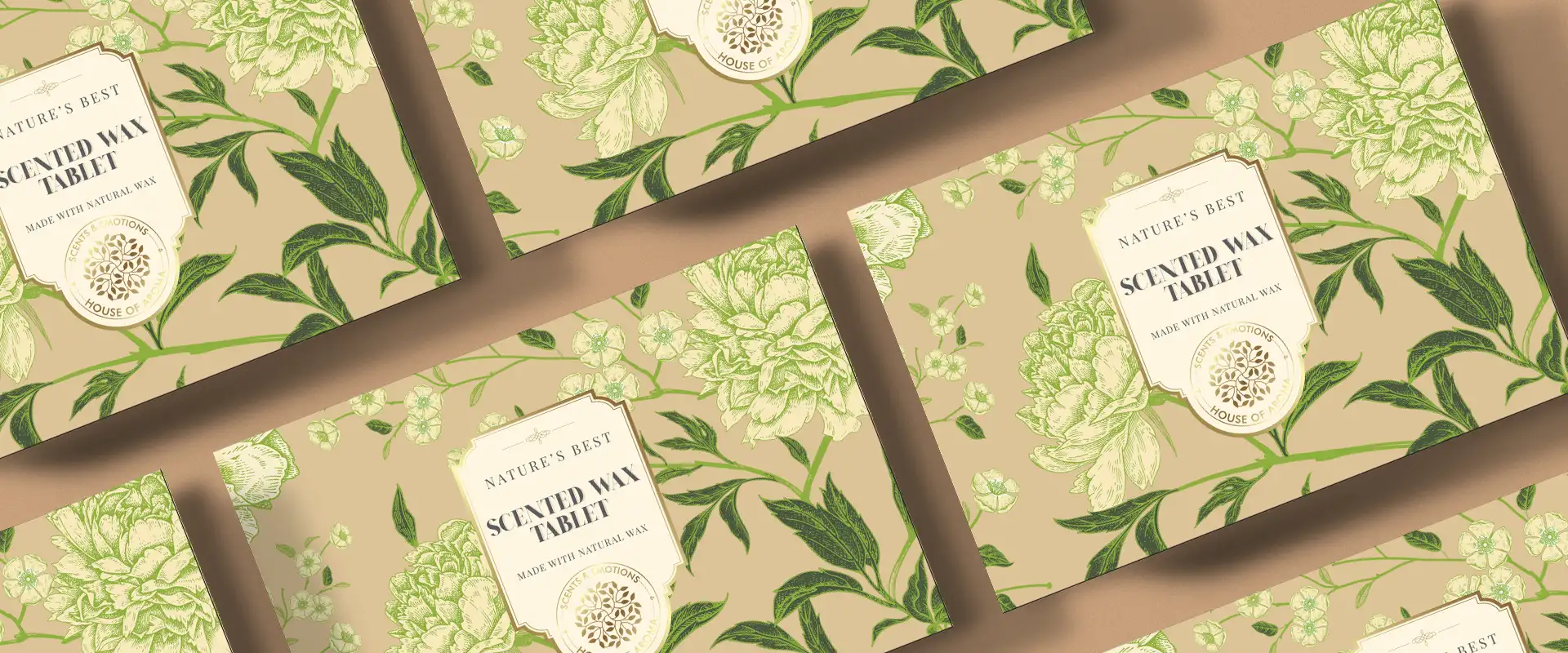
Branding and packaging are two essential elements of a successful product, but they serve different purposes. While branding builds a company’s identity and reputation, packaging communicates that identity through the physical presentation of a product.
Understanding the difference between branding and packaging helps businesses create a consistent identity, attract the right customers, communicate product value, and build long-term recognition.
For startups, D2C brands, FMCG companies, food businesses, beauty brands, and established businesses, branding and packaging should work together rather than being treated as separate activities.
What Is Branding?
Branding is the process of creating a distinct identity for a business, product, or company in the minds of customers.
It includes the visual, verbal, and strategic elements of branding that make a branding design recognizable and different from its competitors.
Logo
Brand colours
Typography
Brand personality
Brand voice
Tagline
Visual language
Brand positioning
Brand story
Photography style
Communication style
Customer experience
For example, when customers see a particular colour combination, logo style, tone of communication, or advertising approach and immediately associate it with a company, that is the result of effective branding.
Why Is Branding Important?
Branding gives a business a recognizable identity. It helps customers understand who the company is, what it represents, and why they should choose it.
Establish credibility
Differentiate from competitors
Create emotional connections
Improve customer loyalty
Communicate positioning
Support premium pricing
Maintain consistency across channels
What is branding in simple words?
Branding is the process of creating a recognizable identity and perception for a business or product.
What does branding include?
Branding can include the logo, colours, typography, brand voice, personality, positioning, messaging, and overall visual identity.
Why is branding important for a business?
Branding helps a business become recognizable, differentiate itself from competitors, build trust, and create stronger customer relationships.
Is branding only about a logo?
No. A logo is only one part of branding. Branding includes the complete identity, personality, communication, and experience associated with a business.
Can branding influence customer buying decisions?
Yes. Consistent and strategic branding can influence how customers perceive a product’s quality, value, credibility, and relevance.
Does every business need branding?
Yes. Whether a business is small, growing, or established, a clear brand identity helps create recognition and consistency.
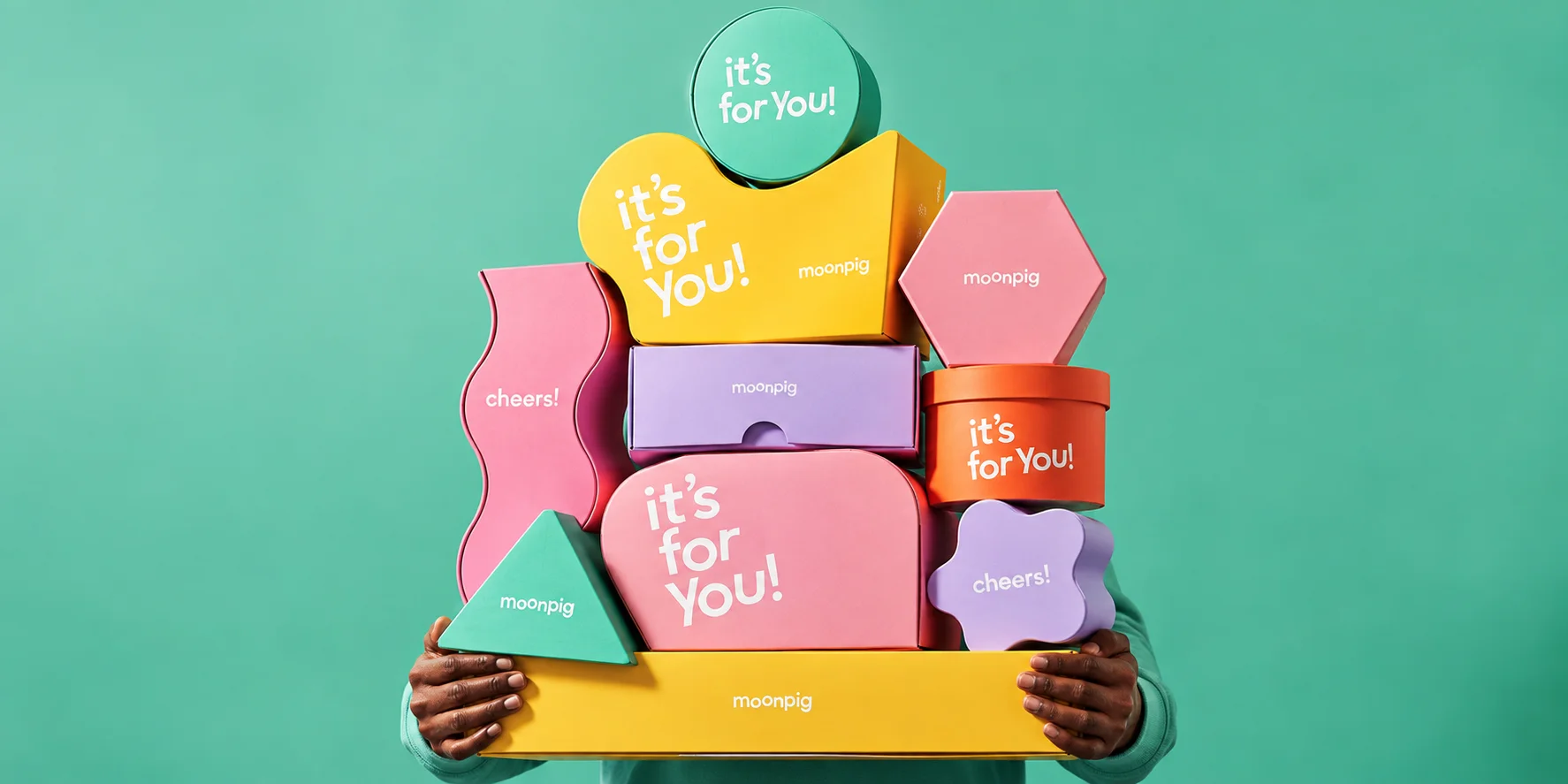
What Is Packaging?
Packaging is the physical or digital presentation system used to contain, protect, transport, identify, and communicate information about a product.
Packaging design combines functionality with visual communication. It is often the first brand touchpoint customers experience when they physically encounter a product.
Secondary packaging
Boxes
Pouches
Bottles
Jars
Labels
Sleeves
Cartons
Shipping packaging
Product information
Regulatory information
Brand graphics
For example, a skincare brand may have a distinctive bottle, printed carton, label system, typography, colours, and product hierarchy. Together, these elements create its packaging experience.
Why Is Packaging Important?
Packaging performs both functional and marketing roles.
Make transportation easier
Provide essential information
Communicate product benefits
Attract attention
Differentiate products on shelves
Reinforce brand positioning
Improve product usability
Create a memorable unboxing experience
Packaging is particularly important in categories where customers compare several products at the same time, such as food, beverages, cosmetics, personal care, household products, and FMCG packaging.
What is packaging design?
Packaging design is the process of designing the visual and structural presentation of a product while considering functionality, communication, usability, and brand identity.
What are the main purposes of packaging?
Packaging protects the product, provides information, supports transportation and storage, and communicates the product’s value and identity.
Is packaging part of branding?
Packaging is one of the important brand touchpoints and should reflect the broader brand identity, although packaging and branding are not the same thing.
Why does packaging matter at the point of purchase?
Packaging can help attract attention, communicate key information quickly, and influence how customers perceive a product.
Can packaging make a product look premium?
Yes. Materials, typography, colours, structure, finishing, imagery, and information hierarchy can influence perceptions of quality and value.
Does packaging need to be functional as well as attractive?
Yes. Effective packaging should balance aesthetics with protection, usability, readability, production requirements, and relevant regulations.
Difference Between Branding and Packaging
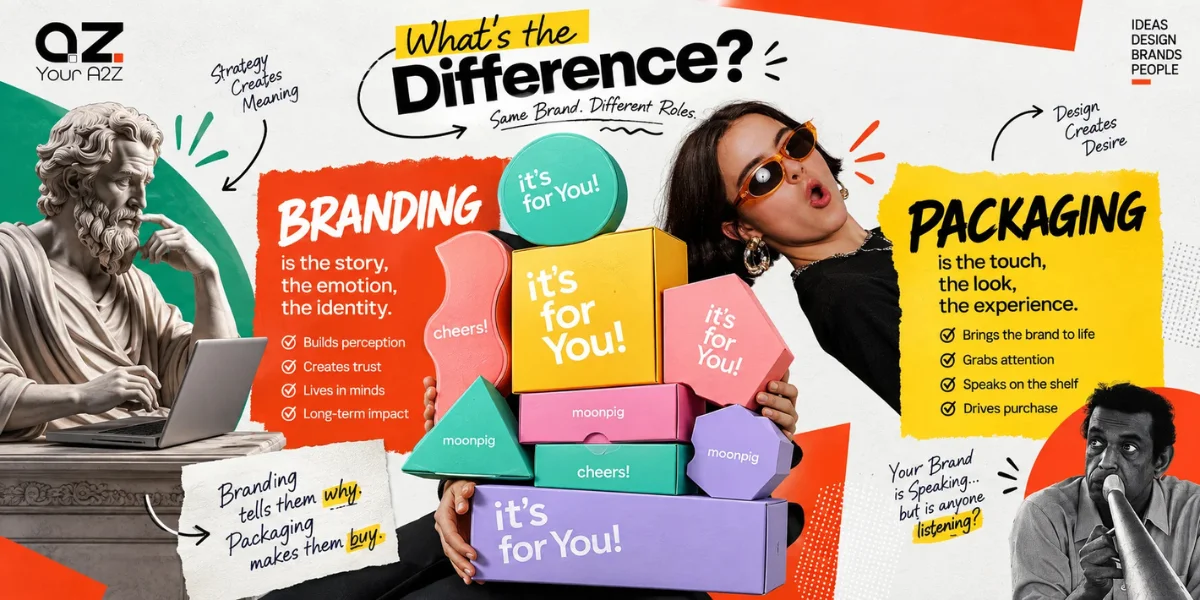
The simplest way to understand the difference between branding and packaging is this:
Branding is broader and covers the overall identity and perception of a business. Packaging is more specific and focuses on how a particular product is contained, presented, identified, and communicated.
| Branding | Packaging |
|---|---|
| Creates the overall brand identity | Presents the product physically |
| Builds recognition and perception | Attracts attention at the point of purchase |
| Applies across multiple touchpoints | Primarily applies to product presentation |
| Includes strategy and identity | Includes structure, graphics, and information |
| Defines brand personality | Translates brand personality onto products |
| Builds long-term brand equity | Influences product experience and purchase perception |
| Covers digital and physical communication | Mainly focuses on the product and its packaging |
| Can remain consistent across products | Can vary according to product, size, format, or variant |
Branding vs Packaging: A Simple Example
Imagine a coffee company.
A warm and sophisticated colour palette
A friendly brand voice
A premium positioning
A specific typography system
A brand story focused on ethical sourcing
Labels
Product names
Roast-level information
Brewing instructions
Origin information
Product photography or illustrations
Packaging materials and finishes
The branding establishes the company’s identity, while the packaging applies that identity to the physical product.
What is the main difference between branding and packaging?
Branding creates the overall identity and perception of a business, while packaging presents and communicates that identity on the physical product.
Is packaging the same as branding?
No. Packaging is a brand touchpoint, while branding is the broader process of defining and managing the identity and perception of the brand.
Which comes first, branding or packaging?
Branding generally comes first because packaging should be developed from an established brand strategy and visual identity.
Can packaging exist without branding?
Packaging can exist without a strong brand identity, but branded packaging is usually more effective at creating recognition and differentiation.
Can good packaging compensate for weak branding?
Good packaging can improve product perception, but it cannot completely replace a strong and consistent brand strategy.
How do branding and packaging work together?
Branding establishes the identity, while packaging translates that identity into a physical product experience.
How Branding Influences Packaging Design
Effective packaging should not feel disconnected from the rest of a brand.
The brand strategy provides the foundation for packaging decisions.
For example, if a brand positions itself as:
Luxury
Packaging may use refined typography, restrained layouts, premium materials, and sophisticated finishes.
Eco-conscious
Packaging may communicate material choices, sustainability information, natural visual cues, and responsible design.
Youth-focused
Packaging may use energetic typography, expressive graphics, bold layouts, and contemporary visual elements.
Minimalist
Packaging may use whitespace, simple typography, limited graphics, and a clear information hierarchy.
Traditional or heritage-focused
Packaging may incorporate heritage-inspired typography, illustrations, patterns, colours, or storytelling.
This is why packaging design should not begin with aesthetics alone.
Before designing packaging, businesses should understand:
How does branding affect packaging design?
Branding establishes the visual language, personality, positioning, and communication principles that packaging should follow.
Should packaging match the brand identity?
Yes. Consistency between packaging and the broader brand identity improves recognition and creates a cohesive customer experience.
Can packaging have its own design style?
Yes, but it should remain connected to the core brand identity so customers can recognize the parent brand.
How does brand positioning affect packaging?
Brand positioning influences choices such as typography, colour, imagery, materials, messaging, structure, and finishing.
Should every product variant have identical packaging?
Not necessarily. A product family can maintain consistent branding while using different colours, graphics, or information systems to distinguish variants.
Why should competitors be studied before packaging design?
Competitive research helps identify category conventions, visual gaps, differentiation opportunities, and ways for the product to stand out.
How Packaging Strengthens Branding
Packaging does more than hold a product. It can become one of the most recognizable expressions of a brand.
When customers repeatedly encounter consistent packaging, they can begin to associate certain visual elements with the brand.
Logo placement
Typography
Illustration style
Product naming conventions
Photography
Graphic patterns
Iconography
Information hierarchy
This consistency helps customers quickly identify products from the same brand.
Packaging as a Brand Touchpoint
A customer may interact with a brand through its:
Packaging therefore needs to feel like a natural continuation of the brand rather than an isolated design project.
Can packaging become part of a brand identity?
Yes. Distinctive packaging elements can become recognizable brand assets over time.
How does packaging improve brand recognition?
Consistent use of colours, typography, logos, layouts, imagery, and structural elements helps customers identify the brand more quickly.
Can packaging create an emotional connection?
Yes. Visual design, materials, storytelling, and the overall product experience can influence customer emotions and perceptions.
Why is consistency important in branded packaging?
Consistency allows customers to recognize products easily and creates a more professional and trustworthy brand experience.
Can packaging influence brand loyalty?
It can contribute to loyalty by creating positive, recognizable, and memorable experiences, especially when the product also delivers on its promise.
Is packaging important after the customer buys the product?
Yes. Packaging continues to influence the experience during opening, usage, storage, gifting, and disposal.
Common Mistakes When Branding and Packaging Are Treated Separately
One of the biggest mistakes businesses make is designing packaging without considering the broader brand strategy.
This can result in:
1Inconsistent Visual Identity
The packaging may use colours, fonts, or graphics that do not appear anywhere else in the brand.
2Poor Brand Recognition
Customers may notice the product but struggle to identify which company it belongs to.
3Overloaded Packaging
Trying to communicate every product benefit can make packaging difficult to understand.
4Weak Differentiation
If packaging follows the same visual language as competitors, the product may disappear within the category.
5Poor Information Hierarchy
Customers should be able to understand the brand, product name, category, and key information quickly.
6Attractive but Impractical Design
A visually impressive concept may fail during printing, production, transportation, shelf display, or everyday use.
What happens when packaging does not match branding?
The brand experience can become inconsistent and customers may find it harder to recognize the product.
Why should businesses avoid copying competitor packaging?
Copying competitors reduces differentiation and can make a product look generic.
Can too much information hurt packaging design?
Yes. Excessive information can create visual clutter and make important product messages harder to find.
What is information hierarchy in packaging?
It is the arrangement of information according to importance so customers can quickly understand what the product is and why it matters.
Should packaging design focus only on appearance?
No. Packaging needs to consider functionality, production, materials, regulations, usability, sustainability, and communication.
How can businesses maintain consistency across multiple products?
A packaging design system can establish consistent rules for typography, colours, layouts, product names, imagery, and variant differentiation.
How to Build a Strong Branding and Packaging Strategy
Businesses can create stronger product experiences by treating branding and packaging as connected parts of one larger strategy.
A practical process is:
How should a business start its branding and packaging strategy?
Start by defining the brand’s positioning, target audience, personality, differentiation, and visual identity before developing packaging.
How important is competitor research for packaging?
It is important because it reveals category patterns and opportunities to create stronger differentiation.
Should packaging be designed for both stores and e-commerce?
Yes. Packaging should work physically on shelves while also remaining recognizable in online product images and thumbnails.
How can a packaging system support future product launches?
A flexible design system allows new products and variants to be introduced while maintaining recognizable brand consistency.
Why is packaging testing important?
Testing helps identify problems with readability, shelf visibility, usability, production, and communication before large-scale production.
Can a packaging redesign change how customers perceive a brand?
Yes. A strategic redesign can modernize the brand, improve differentiation, strengthen positioning, and create a more consistent customer experience.
Branding vs Packaging: Which One Is More Important?
There is no simple winner because branding and packaging solve different problems.
Branding creates the foundation of the business identity. Packaging applies that identity to the product and creates a direct physical touchpoint with the customer.
A business with strong branding but poor packaging may struggle to communicate its value at the point of purchase.
Similarly, a product with attractive packaging but weak branding may generate attention without building long-term recognition.
This creates a consistent journey from brand awareness to product purchase and customer experience.
Final Takeaway: Difference Between Branding and Packaging
The key difference between branding and packaging is their scope and purpose.
Branding defines who a business is and how people perceive it. Packaging communicates that identity through the physical presentation and experience of a product.
Branding is broader, covering identity, positioning, personality, messaging, and customer perception. Packaging is a specific brand touchpoint that combines visual communication, functionality, product information, and physical experience.
For businesses looking to build recognizable products, the goal should not be to choose between branding and packaging. Instead, both should be strategically connected.
Strong branding creates recognition. Strong packaging captures attention. Together, they create a memorable product experience.
About Brij Design Studio
Brij Design Studio is a branding and packaging design studio that helps businesses create distinctive brand identities and packaging experiences. From brand strategy and visual identity to packaging design and brand communication, the studio focuses on creating design systems that are strategic, recognizable, and relevant to the target audience.
For brands looking to understand the difference between branding and packaging and build a stronger connection between their brand identity and product presentation, a strategic approach to both can create greater consistency, differentiation, and long-term brand value.
Is branding more expensive than packaging design?
The cost depends on the project scope. Branding may involve strategy, research, visual identity, messaging, and multiple brand assets, while packaging costs depend on the number of products, packaging formats, design complexity, and production requirements.
When should a startup invest in branding and packaging?
A startup should ideally establish its core branding before developing final packaging. This ensures the packaging communicates a clear and consistent identity from the beginning.
Can a brand change its packaging without changing its branding?
Yes. A business can redesign its packaging while retaining its existing brand identity. Packaging can evolve to improve shelf impact, usability, communication, or market relevance.
How often should a company redesign its packaging?
There is no fixed timeline. Packaging should be reviewed when customer expectations, market competition, product positioning, packaging technology, or business objectives change.
What is the role of a packaging designer compared with a branding designer?
A branding designer focuses on the broader identity and visual language of the brand, while a packaging designer applies that identity to product packaging while considering structure, information, printing, materials, and usability.
Does better branding always lead to better packaging?
Not automatically. Strong branding provides a strategic foundation, but successful packaging also requires category research, packaging expertise, functional considerations, clear information hierarchy, and effective execution.