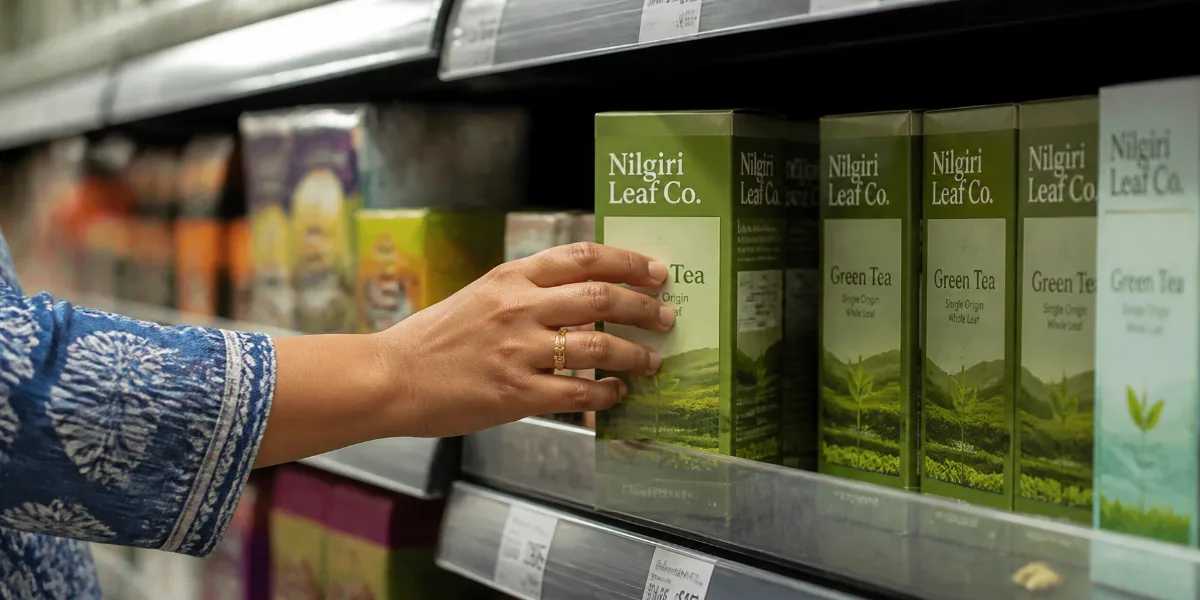
Brand packaging is the reason a shopper in a Pune supermarket picks one tea carton over three nearly identical ones, and most of the time she can’t tell you why. She only knows that one pack felt right.
Now think about a two-person millet startup. The recipe took a year to get right. The pack got two weeks, a stock photo of wheat and a font the founder liked. On a kirana shelf under a tube light, it looks like every other brown carton. Nobody picks it up twice.
That gap between a good product and a pack that does it justice is where most small brands lose their first year. This guide explains what brand packaging really is, what goes into it, how to build it step by step and which mistakes cost the most. It is written for founders, not designers, so nothing here needs a design degree.
If you only remember one thing, remember this: the pack is the first and often the only conversation a brand has with a stranger.
What Is Brand Packaging?
Brand packaging is everything on and around a product that tells a shopper who made it and why they should trust it. That covers the pack itself, its colours, its words, its feel in the hand and even the box it arrives in.
Plain packaging holds a product and keeps it safe. Brand packaging does that too, then goes one step further and carries a personality. A steel tin of ghee and a glass jar of ghee can hold the same ghee. One says “family recipe, handled with care”. The other says “modern, clean, a little premium”. The shopper reads that message before reading a single word.
It is also not the same thing as a logo. A logo is one piece. Brand packaging is the whole system: how the logo sits, which colour leads, how the flavour names are written, where the nutrition panel goes and how the pack looks next to its siblings. If you want to see where one ends and the other begins, the difference between branding and packaging is a good short read.
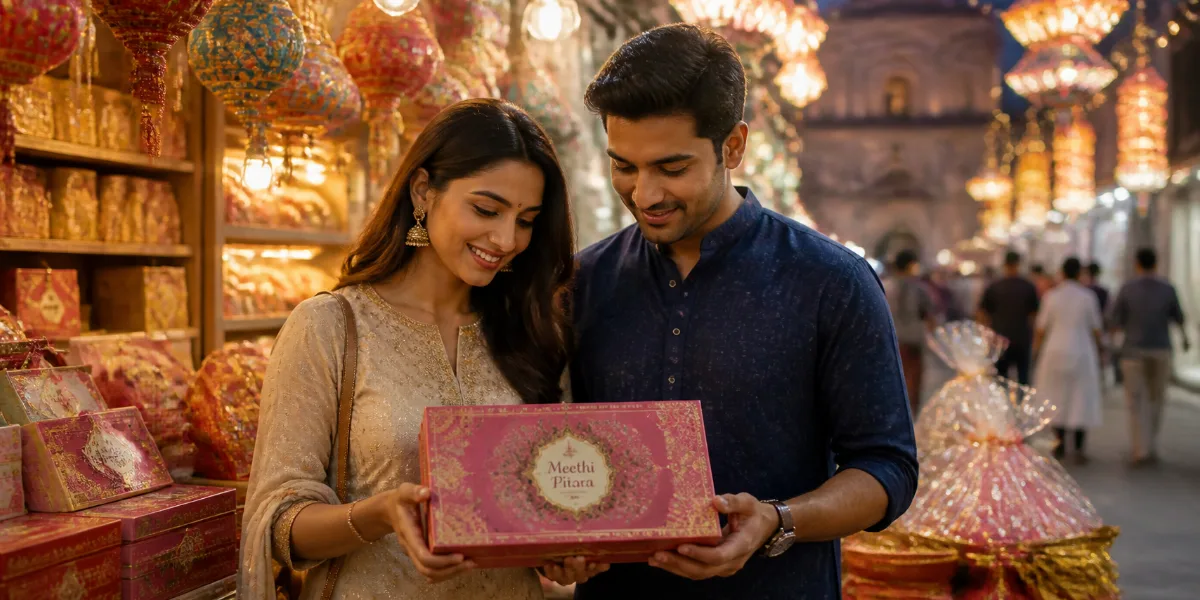
For a brand that sells in shops, brand packaging is the main advert. There is no salesperson standing next to it. The pack has to introduce the brand, make the product look good and answer the shopper’s quiet questions: Is this for me? Is it fresh? Can I trust it?
FAQs: What Is Brand Packaging?
What is the meaning of brand packaging?
It is packaging designed to carry a brand’s identity, not just to hold the product. Colours, shapes, words and materials all work together to show who the brand is.
Is brand packaging the same as product packaging?
Not quite. Product packaging protects and holds the product. Brand packaging adds the brand’s personality on top, so the same pack also makes people remember and trust the brand.
What are some examples of brand packaging?
A matching set of snack pouches with one colour per flavour, a ghee jar with a hand-lettered label, a hamper box with a branded ribbon, or a courier mailer with the brand’s pattern printed inside.
What kind of brand packaging work does Brij Design Studio do?
Brij Design Studio designs packaging for brands, from the first idea to print-ready files. It also works on the branding behind the pack, so the logo, colours and words on the pack all belong together.
Why Does Brand Packaging Matter for a Growing Brand?
Brand packaging matters because a shopper decides in seconds, and the pack is usually the only thing they see. A pack that looks careful makes the product feel careful, even before it is opened.
Think about where a small brand actually meets its buyers. A kirana shelf. A quick-commerce thumbnail the size of a thumbnail. A Diwali hamper opened in a living room. A WhatsApp photo forwarded by a friend. In every one of those places, the pack is working alone.
A few things follow from that:
- A clear pack gets picked up. A confusing one gets ignored, however good the product is.
- A consistent pack gets remembered. When the second flavour looks like the first one’s cousin, shoppers start to spot the brand from across the aisle.
- A well-made pack makes people assume the product is well made. It is unfair, and it is true.
- A pack people like gets photographed. Free attention is still attention.
There is a quieter benefit too. When the packaging system is built properly, adding a new flavour or size takes days instead of weeks, because the rules already exist. Read more on this in the guide on the importance of product packaging design.
FAQs: Why Brand Packaging Matters
Does packaging really affect sales?
Yes. For products bought off a shelf or a phone screen, the pack is what people judge first. A clear, trustworthy pack gets picked up more often than a confusing one.
Why do shoppers trust some packs more than others?
Small signs add up: clean printing, readable text, sensible colours and a finish that feels solid. Careless details make people wonder what else was done carelessly.
Do small brands need brand packaging as much as big ones?
More, honestly. A big brand has adverts and habit on its side. A small brand has only the pack to introduce itself.
Which kinds of brands has Brij Design Studio created packaging for?
Its case studies include food, dairy and confectionery packs, along with rebrands for growing companies. You can browse them on the case studies page.
What Are the Parts of Brand Packaging?
Brand packaging has six working parts: the name and logo, colour, typography, material and shape, the words and information, and the finish. Each one sends a small message, and they work best when they all say the same thing.
1Name and Logo
The anchor of the pack. It needs to be readable from a metre away and still look right when shrunk to a phone thumbnail.
2Colour
Usually the first thing noticed. A good colour plan gives the brand one lead colour and uses the rest to sort flavours or variants.
3Typography
Letter shapes carry mood. Thin and wide feels calm, heavy and rounded feels friendly. Legibility always comes before charm.
4Material and Shape
Paper, glass, tin, a stand-up pouch or a rigid box all feel different. The structure also decides how the pack sits on a shelf and survives a courier.
5Words and Information
The product name, a short promise, ingredients, weight and legal text. Every pack has to carry a lot, and the order it is shown in is a design decision.
6Finish and Extras
Matt or gloss, foil, embossing, a window, a ribbon, a thank-you card. These are small touches that make people say “oh, nice”.
All six belong to the same system. For a deeper look at the thinking behind them, the elements of branding page walks through how a brand identity is put together before a single pack is drawn.
FAQs: Parts of Brand Packaging
What are the main elements of brand packaging design?
Logo, colour, typography, material, structure, the written information and the finish. Together they make the pack look and feel like one brand.
Which part of a pack do shoppers notice first?
Usually colour and shape, then the brand name, then the product name. That is why the front of the pack gets the most design attention.
Can I change one element, like the colour, without redesigning everything?
Yes, if the system was built well. A good design lets you refresh one part, such as a flavour colour, without touching the rest.
Does Brij Design Studio design all these parts in-house?
Yes. The work from strategy to print-ready files runs in-house at the studio, so the people shaping the logo and colours are the same ones preparing the final pack files.
How to Create Brand Packaging, Step by Step
To create brand packaging, decide who it is for, define what the brand stands for, study the shelf, pick the format, design the front of the pack first, test it and then prepare the files for print. Skipping the early steps is where most packs go wrong.
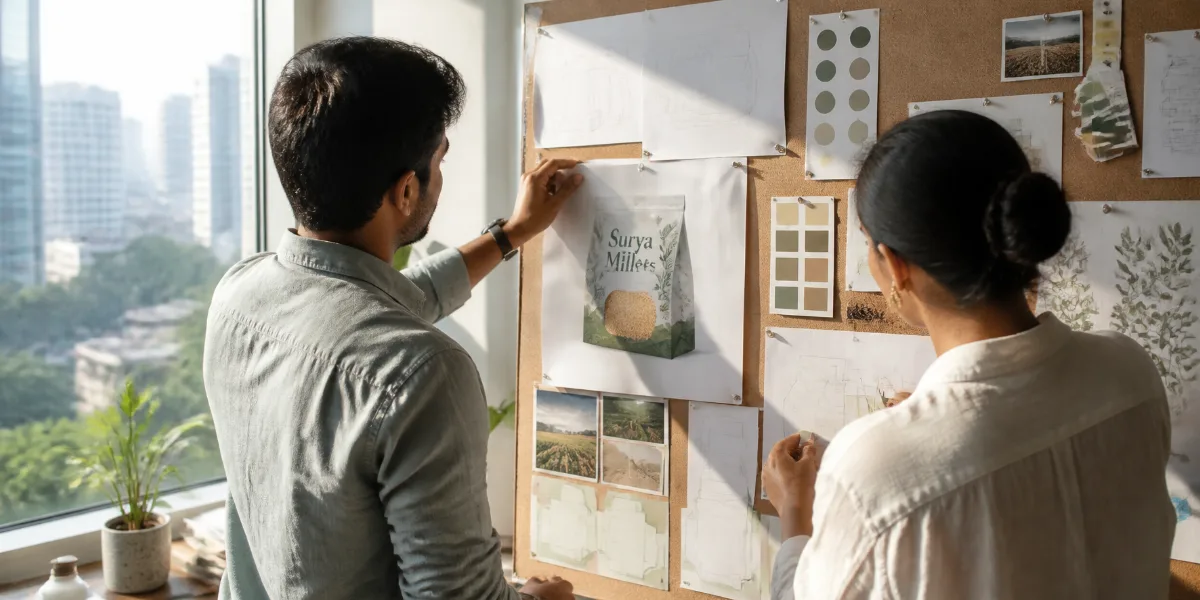
1Know the Shopper
Who picks this up, where, and in what mood? A busy parent in a supermarket needs a different pack from a gifting buyer online.
2Say What the Brand Stands For
Write it in two plain lines. If a stranger could not repeat it back, the design has nothing to hold on to.
3Study the Shelf
Stand where your pack will stand. Note the colours around it, then decide where yours should be different on purpose.
4Choose Format and Material
Pouch, jar, carton or box, and how it will be filled, sealed, stacked and shipped. Pretty is no use if the machine can’t run it.
5Design the Front First
The front of the pack gets one job: be recognised in three seconds. Details, panels and the back come after.
6Test with Real Mock-ups
Print it, fold it, put it on a shelf and take a photo from across the room. Things that look fine on a screen often fall flat in a hand.
7Prepare Print-Ready Files
Correct sizes, colour settings and legal text, then a proof check with the printer before the full run.
How Should Brand Packaging Show Brand Identity?
It should look like the same person is talking on every pack. The tone, the colours, the way flavour names are written and the space around the logo should repeat so often that the shopper stops noticing the repeating and starts noticing the brand.
A heritage mithai brand might use deep reds, a classic serif and lots of ornament. A fitness snack brand might go bold, bright and compact. Neither is better. They are right for different shoppers, and a pack that mixes both ends up looking like it doesn’t know what it is.
Which Colours and Fonts Suit Which Kind of Brand?
Warm earthy tones and rounded letters suit homely, natural food brands. Deep, restrained colours and fine type suit premium gifting. Bright colours and heavy, simple type suit young, fast-moving snacks. Whatever you choose, keep text high-contrast so it reads in poor shop light, and read up on how to choose brand colours before settling on a palette.
FAQs: Creating Brand Packaging
How do I start designing brand packaging for a new product?
Start with the shopper and the brand’s two-line story, not with colours. Once those are clear, the design choices become much easier to make.
How long does a brand packaging project usually take?
It depends on how many products, pack formats and rounds of feedback are involved. A single pack takes less time than a full range, and printing adds its own days on top.
Should I design the logo before the packaging?
Ideally, yes, or at the same time. A logo that is drawn after the pack tends to get squeezed to fit, and it shows.
Can Brij Design Studio take a brand packaging project from the first brief to print-ready files?
Yes. The studio handles the work from strategy to print-ready files in-house, so you deal with one team through the whole project.
What Should You Ask Before Approving a Pack?
Before you approve a pack, ask whether it can be read in three seconds, whether it still works in black and white, and whether a stranger can say what is inside. A few honest questions here save a costly reprint later.
- “Can I tell what this product is from across the room?”
- “If the colour printed slightly off, would the pack still look right?”
- “Does the front say one clear thing, or five things at once?”
- “Will it survive a courier, a stacked carton and a humid kitchen?”
- “Is every legal and ingredient detail there, and readable?”
- “If I put the next flavour beside it, do they look like a family?”
If the answer to any of these is a hesitant “I think so”, ask the designer to show you a printed mock-up before going further. A screen can make nearly anything look finished.
FAQs: Before Approving a Pack
What should I check on a packaging proof?
Spelling, weight and ingredient details, barcode space, colour, and whether the text is readable at actual size. Read it out loud once, slowly.
Is a printed mock-up really necessary?
Yes, for anything you are about to print in volume. Size and feel are almost impossible to judge on a screen.
How many rounds of changes are normal?
Usually two or three. If you are on round six, the brief probably was not clear enough at the start.
Can I see how Brij Design Studio’s packs have worked in real projects?
Yes. The case studies page shows real packaging and branding projects, so you can judge the work yourself.
Common Brand Packaging Mistakes
The most common brand packaging mistake is trying to say everything on the front of the pack. After that come copying a competitor’s look, picking a colour only because it is a favourite and skipping the printed test.
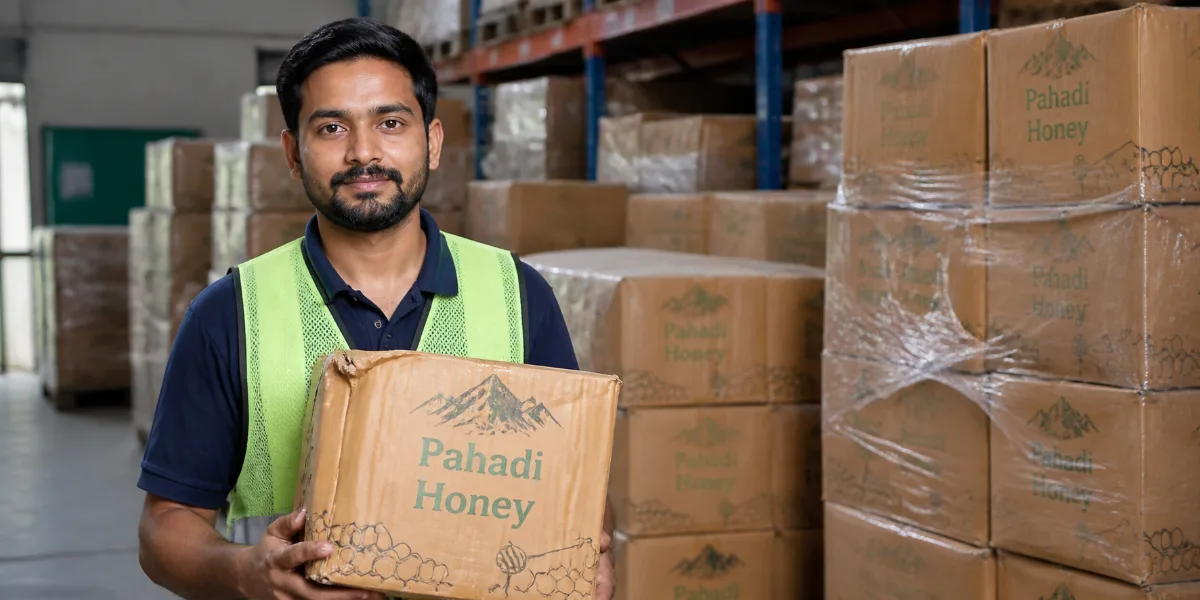
Here is how those usually play out:
- Too much on the front. Eight claims, three badges and a photo, and the shopper reads none of them.
- Copying the category leader. It feels safe, but a lookalike only advertises the original.
- Design before strategy. Pretty, but not about anything.
- Ignoring the machine and the courier. A pack that can’t be filled or crumples in transit costs more than a good designer would have.
- Forgetting the next product. The first pack looks great and the second needs a whole new system.
The packaging design mistakes guide goes through more of these with examples.
FAQs: Brand Packaging Mistakes
What is the biggest packaging mistake startups make?
Putting too much on the front. A pack that tries to say everything usually says nothing clearly.
Is it a mistake to copy what the category leader does?
Mostly, yes. A copycat pack makes shoppers think of the original brand, not yours. It is better to borrow the clarity and change the personality.
Can a bad pack be fixed without a full redesign?
Often. Cleaning up the hierarchy, simplifying the front and fixing the colours can help a lot before anything bigger is needed.
How does Brij Design Studio help startups avoid these brand packaging mistakes?
By starting with strategy before any drawing, and by checking the pack against real print and shelf conditions before the files go out. The aim is a pack that works in the real world, not just on screen.
How Does a Brand Packaging Project Run at a Design Studio?
A brand packaging project at a design studio usually runs in five stages: a brief, research, design concepts, refinement and print-ready files. A good studio keeps the same people through all five so nothing gets lost between steps.
Brij Design Studio is a branding and packaging design studio in Mumbai, in Vile Parle East. Its founders, Birju and Kruti Chatwani, have worked in branding and packaging for more than 20 years, and every project runs in-house from strategy to print-ready files. For a brand, that means the person who understood your story is still in the room when the final file is checked.
What to expect at each stage, in plain words:
- Brief: the studio asks about the product, the shopper and the shelf.
- Research: other packs in the category get a hard look.
- Concepts: a few clear directions, not twenty confusing ones.
- Refinement: the chosen direction is polished and tested on mock-ups.
- Files: print-ready artwork, ready to go to the printer.
You can see what this looks like in practice on the brand packaging services page.
FAQs: The Brand Packaging Process
What do I need to share with a design studio at the start?
The product, who it is for, where it will be sold, a sense of the brand’s personality and any packaging you already like or dislike. Rough notes are fine.
Who owns the final packaging design?
That is set out in the agreement before the project starts. It is worth asking about early, so there are no surprises later.
Do I need a logo before I approach a packaging studio?
No. If you don’t have one, a studio can build the logo as part of the same project, which usually gives a more consistent result.
Who will I actually work with at Brij Design Studio?
The studio is led by its founders, Birju and Kruti Chatwani, and the work runs in-house. That means your project stays within one team from the first conversation to the final files.
Agency, Freelancer or DIY: Who Should Design Your Pack?
A freelancer can suit a single, simple pack, a design studio suits a brand that wants strategy and a full range, and doing it yourself only works when the pack is very simple and the stakes are low. The right choice depends on how much of the brand still needs to be decided.
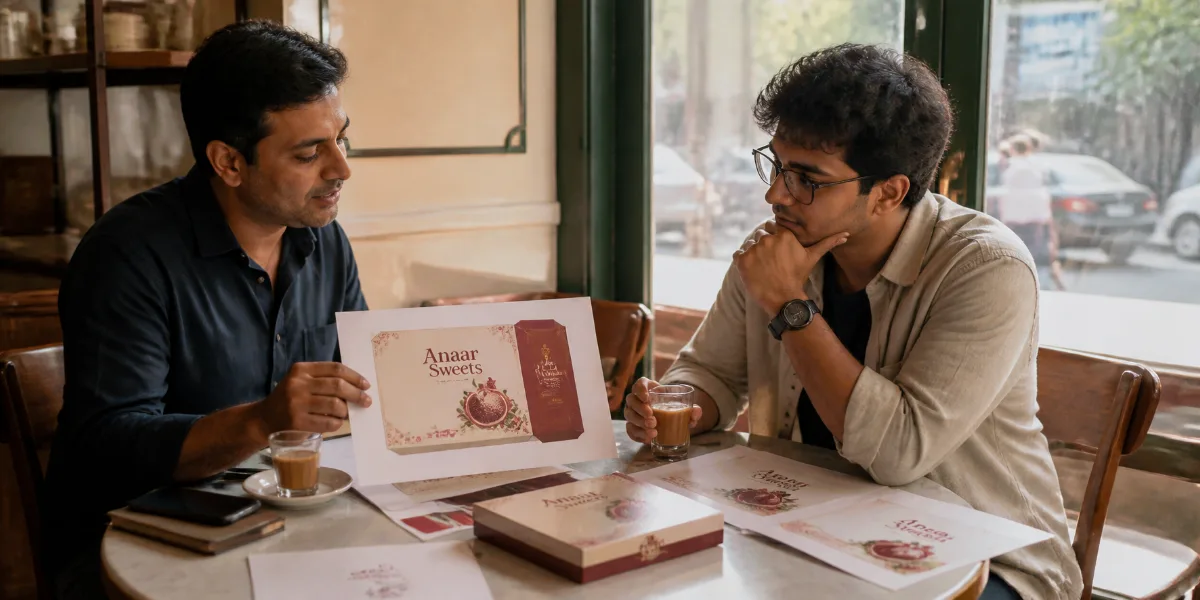
A freelancer is often quicker and gentler on the budget for one clear job, such as a label for an already-defined brand. The trade-off is that you carry more of the thinking, and if the freelancer is busy or unavailable, the project waits.
A design studio brings strategy, design and print knowledge under one roof. It makes more sense when the brand identity is still being shaped, when there is a range of products to plan or when the pack has to work in several places at once. Startups looking at this route can read the guide on choosing a packaging design agency for startups.
Doing it yourself works for a first batch, a local market stall or a test run. The risk is that a homemade pack can quietly cap how far the brand is taken seriously. Plenty of founders do a DIY first pack and hire help once sales justify it. That is a perfectly sensible plan.
FAQs: Choosing Who Designs Your Pack
Is it better to hire a freelancer or a packaging design studio?
A freelancer suits one simple, well-defined job. A studio suits a brand that needs strategy, a range of packs and print guidance together.
Can I use free design tools for my first pack?
For a test batch, yes. Just keep print sizes and legal text correct, and plan to upgrade once the product starts selling.
What should I ask a designer before hiring them?
Ask to see packs they made that are actually on shelves, how they handle print files, how many revisions are included and who will do the work.
Why would a startup pick Brij Design Studio over a freelancer?
Because strategy, design and print-ready files sit under one in-house team led by experienced founders. A startup that is still shaping its brand gets the thinking and the finished artwork from the same place.
Where Is Brand Packaging Heading?
Brand packaging is heading towards lighter, recyclable materials, shorter print runs, clearer information and packs that work as well on a phone screen as on a shelf. Shoppers have started to expect a pack to look good and to be easy on the planet.
A few shifts worth planning for:
- Less material, easier to recycle. Mono-material pouches and simple paper cartons are gaining ground. Read more in the guide to sustainable packaging design.
- Smaller, more frequent print runs, which let brands test limited flavours and festive editions.
- Regional language on the pack, as brands grow beyond a single city.
- Thumbnail-first design, since quick-commerce shoppers see a pack the size of a postage stamp before they see it for real.
The idea of a circular economy, where materials are reused rather than thrown away, is explained simply by WRAP, a climate charity. It is a good place to start for brands curious about where packaging rules and expectations are going.
FAQs: The Future of Brand Packaging
Will sustainable packaging replace regular packaging?
Gradually, and not for every product at once. Many brands are moving towards recyclable or lighter materials where the product allows it.
Does eco-friendly packaging cost more?
It depends on the material, the format and the print run. Some options cost more and some less, so it is best to compare real quotes for your own pack.
Do QR codes on packs actually help?
They can, when they lead somewhere useful, like a recipe or an origin story. A QR code that goes to the home page and nothing else is just clutter.
Does Brij Design Studio design sustainable brand packaging?
The studio has a full guide on sustainable packaging design, and material choices can be discussed during a project depending on the product and the brand’s goals.
Why Choose Brij Design Studio for Brand Packaging?
Brij Design Studio is a branding and packaging design studio in Mumbai. Its founders, Birju and Kruti Chatwani, have worked in the field for more than 20 years, and every project runs in-house from strategy to print-ready files.
That matters because brand packaging goes wrong in the gaps: the strategy that never reached the designer, the design that never met the printer. A studio that keeps all of it in one place has fewer gaps to fall into.
To see the thinking behind this work, visit the brand packaging services page or the packaging design page. For a first conversation, the design studio in Mumbai page has the details.
Conclusion
Good brand packaging is not decoration. It is the first sentence a brand says to a stranger, and it gets said without any help.
Start with the shopper and the story, build one clear system, test it in your hands and then print. Do those four things and most of the common mistakes disappear on their own.
A pack doesn’t need to shout. It needs to be remembered.
Common FAQs About Brand Packaging
What is brand packaging in simple words?
It is a pack that does two jobs: it protects the product, and it shows people what the brand is like.
How is brand packaging different from branding?
Branding is the whole identity of a business. Brand packaging is how that identity shows up on the pack someone holds.
What makes brand packaging effective?
Clarity, consistency and a good fit with the shopper. People should understand it quickly and recognise it again.
How much should a startup spend on brand packaging?
There is no single figure. It depends on the number of products, pack formats, materials and print runs, so it is best to plan around those rather than a fixed number.
Can I redo my brand packaging later?
Yes. Many brands refresh their packs as they grow. A good first design makes that refresh easier because the core system stays the same.
How do I choose colours for brand packaging?
Pick one lead colour that suits the brand’s personality and check that it stands apart from nearby competitors on a shelf. Then keep supporting colours simple.
Does packaging colour affect how people see the product?
It does shape expectations. Green often reads as natural, black as premium, bright colours as fun. What matters is that the colour fits the product and shopper.
What is the difference between primary and secondary packaging?
Primary packaging touches the product, like a pouch or jar. Secondary packaging holds the primary packs, like a carton or gift box.
How can I get a brand packaging project started with Brij Design Studio?
Write down the product, the shopper and where it will be sold, then reach out through the contact page. The studio takes it from there.
Does Brij Design Studio work on branding as well as packaging?
Yes. The studio offers branding design, packaging design and brand creation, so the brand and its packs can be built together.