
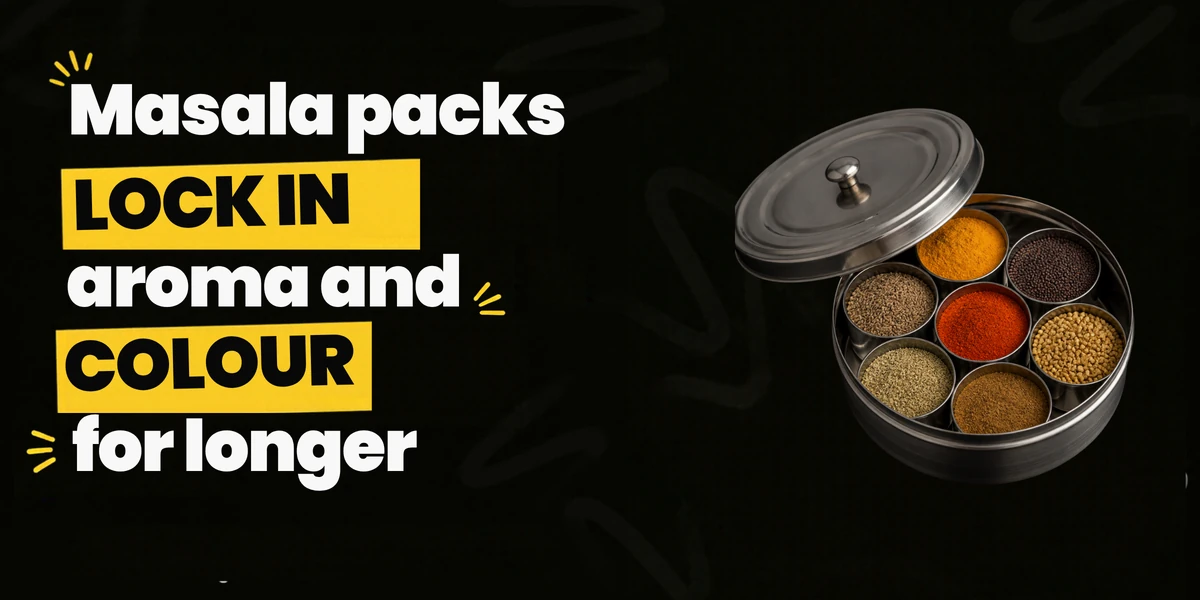
Say a family spice unit near Erode has sold loose haldi and sambar powder for thirty years, and the founder’s son now wants a proper brand, so his first big job is masala pouch design. He picks a glossy white pouch because white looks clean. By the third month a shop owner in Salem is on the phone: the top edges have gone yellow, the sambar powder smells flat, and his eight blends all look like the same pouch with a different word on it.
None of that is a printing problem. It’s a brief that treated spices like any other dry grocery.
Spices are harder on a pack than most food. Their smell escapes, turmeric stains, chilli red fades, and a successful brand ends up with twenty-odd blends that must still be told apart on one shelf.
This guide stays with that one problem: pouches for masala and spice brands. The general basics of pouch types, films and printing are in the guide to pouch designing, and the barrier needs of other foods are covered in food pouch design.
What Is Masala Pouch Design?
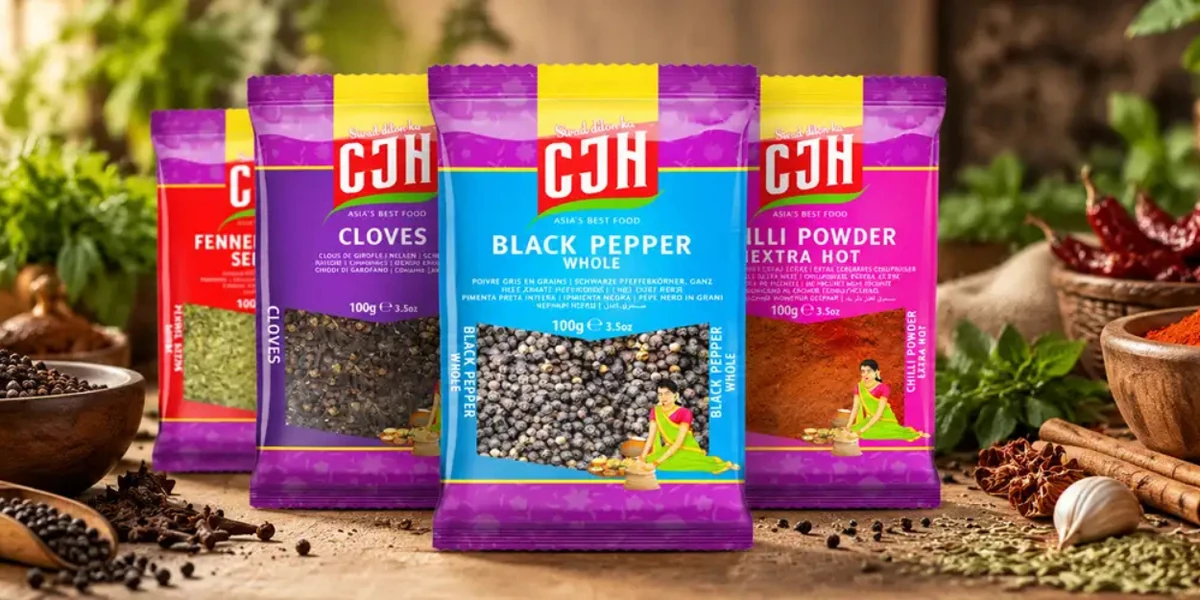
Masala pouch design is the planning of a flexible pack for ground spices and spice blends: the film that keeps the smell in, the sizes and closures, and the front and back artwork for every variant in the range. Think of it as food packaging with three extra enemies: escaping aroma, staining dye and fading colour.
A good masala pouch does two jobs that pull against each other. It has to be dark and tight enough to protect a powder that spoils in light, and it has to sell a dish nobody can see or smell through the film. It’s a different brief from a snack pack too: namkeen pouch design worries about crunch, while a masala pouch worries about smell, stains and a much longer list of variants.
Blended Masalas and Single Spices Are Two Different Briefs
Single spices (haldi, mirch, dhaniya, jeera) are bought by weight and by habit. Families go through them fast, buy big packs, and choose on colour, purity and trust. The front needs the spice name very large, often in the local script first, and not much else.
Blends are bought for a dish. Nobody wants “a mix of 14 spices”. They want Sunday chicken curry. So blend pouches lean on the dish name, a picture of the meal and often a recipe, and they sell in smaller packs. A brand selling both needs two layouts that clearly belong to one family. Forcing one template onto both is where many ranges start looking muddled.
FAQs: What Masala Pouch Design Covers
What is masala packaging?
It’s how ground spices and blends are packed (pouches, cartons, jars or sachets) so the aroma stays in and moisture, air and light stay out, with the branding and the legal label printed outside.
Which pouch type is most common for spices in India?
Stand-up pouches for 100 g and above, and flat three-side seal pouches or sachets for small packs. Cartons with a pouch inside are still common for blends.
Do single spices and blended masalas need different packs?
Usually, yes. Single spices sell in bigger packs on purity and colour. Blends sell in smaller packs on the dish, so they need more room for a picture and a recipe.
Does Brij Design Studio design masala and spice packaging?
Yes. Its packaging design page shows an Indian spices project that pairs a spice pouch with a carton box, and its case study page names spices among the FMCG and food work it covers.
Why Are Spices So Hard on a Pouch?
Because what makes a spice good is exactly what escapes, stains or fades: smell in volatile oils, colour in pigments that break down in light, and powder fine enough to get into every seal.
Aroma Leaks Out Before the Date Runs Out
Grinding breaks open the tiny oil cells that carry a spice’s smell, and from then on the oils are trying to leave. A thin film lets them seep out, so a pack can be perfectly safe on its expiry date and still smell of very little. Foil or metallised layers and a tight reseal slow this down. A shopper who opens a flat garam masala doesn’t blame the film. She blames the brand.
Oil Creeps Into Weak Laminates
Blends with roasted coconut, sesame or crushed chilli seeds give off a little oil over time. It shows as dark patches on paper-faced pouches and can loosen a laminate that wasn’t built for it. Tell the pouch maker exactly what’s in the blend, not just “masala”.
Haldi and Mirch Stain Everything
Turmeric is a dye. Haldi or chilli dust that lands on the seal area during filling leaves yellow or red streaks along the top, and powder caught inside a seal is a common reason seals turn weak. Inside, it tints a white sealing layer within days. A darker inner face, a little more headspace and a filling machine set up for fine powder all help. So does not designing a pouch whose top band is pure white.
Shop Lights Fade the Colour
Turmeric yellow and chilli red both dull under light. A 2025 lab study in the journal Molecules found that turmeric’s colour pigment broke down under ordinary fluorescent tubes and white LED light, and faster under the LED. That’s a strong argument against big clear windows on haldi and mirch.
Then there’s the monsoon. A pouch with a weak zip in a Mumbai kitchen in July turns loose chilli powder into a brick.
FAQs: Why Spices Are Hard on Packaging
Why does masala lose its smell in the packet?
The aroma comes from oils that slowly pass through thin films, and escape faster every time the pack is left open. Better barrier layers and a proper reseal slow it down.
Why does turmeric stain the inside of a pouch?
Its yellow pigment is a strong dye that clings to plastic. A darker or printed inner layer hides it.
Should a masala pouch have a window?
Mostly no. Light dulls haldi and chilli, and the clear patch protects less than the rest of the film. If a window is a must, say for whole spices, keep it small and keep stock moving.
How does Brij Design Studio plan artwork around a masala pouch’s film and seals?
Its packaging design page says designs are developed according to the product brief and the technical specifications provided for production. So the film, seal widths and fill line set by the pouch maker shape the artwork from the start.
How to Plan Masala Pouch Design for a Full Range
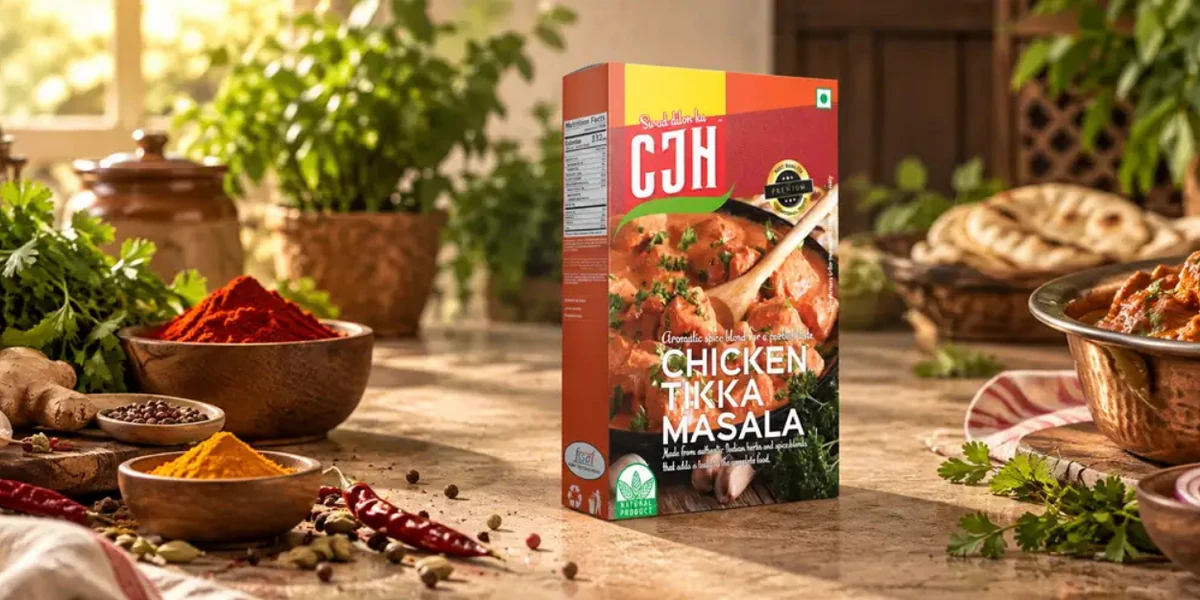
Start with how families buy and cook, then give every product a size, a format and a closure before anyone opens a design file. A masala range gets planned like a shelf, not like one pack.
List each blend or spice, who buys it, how fast it’s used and where it sells. Patterns jump out. Haldi goes fast in big packs. Biryani masala comes out twice a month. Chaat masala lives on the dining table. Each wants a different pack.
Which Pouch Sizes Does a Masala Brand Need?
Most brands need three tiers: small sachets for trial and kirana sales, everyday packs in the 50 g to 200 g band, and big pouches of 500 g or 1 kg for the spices families use daily.
10 g Sachets and Kirana Hanging Strips
Small sachets often sell in strips hung by the kirana counter and torn off one at a time. Design them as a strip, not a single sachet. With twelve in a row, the brand mark and dish name should read from across the shop, and the tear line must fall between artworks, never through the logo.
50 g to 200 g: The Everyday Middle
This is where blends live, in a flat pouch inside a carton or a small stand-up pouch. Packs this size often get tipped straight into a steel dabba, so a clean tear matters more than a reseal.
500 g and 1 kg Stand-Up Pouches
Big packs are for haldi, mirch, dhaniya and jeera, bought monthly by heavy users and small eateries. A wide bottom gusset so the pack stands when half empty, a firm tear notch and a big spice name matter more than decoration. The guide to stand-up pouch packaging design covers the format itself.
Zip or No Zip: Which Sizes Need a Reseal?
Give a zip to any pack that will be opened more than three or four times. For most brands that means blends from 100 g up and single spices from 200 g up. Sachets, and small packs that get emptied into a dabba on day one, don’t need one.
Zips have trade-offs. They take the top band of the front, and fine haldi dust clogs press-to-close tracks quickly. Put the brand name below the zip line.
FAQs: Masala Pouch Sizes and Zips
What sizes do masala pouches come in?
Commonly small sachets of around 10 g, everyday packs from 50 g to 200 g, and large packs of 500 g and 1 kg. The right mix depends on the spice and where it sells.
Do spice pouches need a zip lock?
Packs opened again and again do. A sachet, or a pack that gets poured into a container on the first day, doesn’t.
How do kirana sachet strips work?
Sachets are joined in a long strip that hangs near the counter, and the shopkeeper tears one off for each sale. The artwork has to work as a strip and as a single sachet.
Can Brij Design Studio design one masala range across sachets, pouches and cartons?
Its packaging page lists pouches, cartons, labels, jars, sleeves and multi-product packaging systems, and its Indian spices project combines a spice pouch with a carton box.
How to Build a Colour System for 20 or More Masala Variants
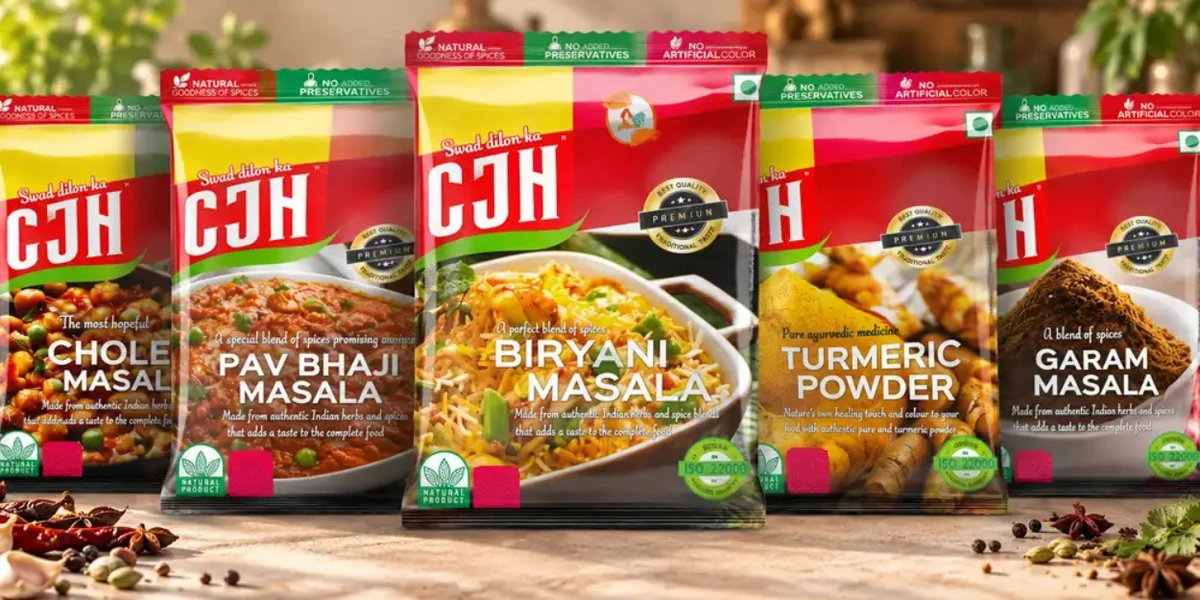
Group the range into families, give each family one colour, and keep the logo, layout and type in the same place on every pack. At twenty variants, the system matters more than any single pouch.
Without a plan, a growing brand ends up with a red chicken masala, a red mutton masala and a red pav bhaji masala, and people pick up the wrong one. Brij Design Studio’s packaging design page says it plainly: consistency across multiple SKUs requires a clear packaging system. Here’s one way to build it.
1Sort the Range Into Families
Everyday single spices, meat blends, veg curry blends, chaat masalas, regional specials. Five families are easier to manage than twenty colours.
2Give Each Family One Colour
Chilli red is expected for meat blends, greens and warm yellows for veg. Colours shoppers already link with food save explaining.
3Change the Shade, Not the Colour
Chicken and mutton masala can share red, one lighter and one deeper, each with its own dish photo. Shoppers learn the family first and the variant second.
4Lock the Brand Block
Logo, veg mark and net weight sit in the same spot on every pouch. Fixed positions are what make twenty packs read as one brand.
5Make the Dish Name the Biggest Words
On a blend, the dish sells, so its name beats the brand name for size. Single spices get the spice name, often in two scripts.
6Test Them All Together
Print every front at real size and lay them in a grid on a table, then shrink the grid to phone-thumbnail size. Packs that blur together there will blur on an app too.
7Write the Rules Down
One page: family colours, shade steps, fixed positions and type sizes. Variant number 23, designed next year by someone new, depends on it.
FAQs: Variant Colours for a Spice Range
How do spice brands colour-code their range?
Most group their blends into families, give each family a colour, and then change the shade and the dish photo inside it.
What colour is best for masala packaging?
There isn’t one. Red and orange say heat and meat, green says veg and freshness, black or deep brown often says premium. Pick by family, then check the whole range side by side.
How many colours can one masala range carry?
Five or six family colours with shade steps is plenty. Beyond that, shoppers stop seeing a system and start seeing noise.
How does Brij Design Studio keep a large masala range looking like one brand?
Its packaging page says consistency across multiple SKUs needs a clear packaging system, and its work focuses on clear information hierarchy and consistent brand systems. In practice, that means fixed positions and written rules every new variant follows.
Dish Photo, Spice Photo or Illustration?
Use a dish photo for blends, a spice photo for single spices, and illustration when the brand wants to look unlike the rest of the aisle. Each choice tells the shopper something different about what they’re buying.
Dish Photo: Sells the Meal
A steaming bowl of chhole tells a shopper exactly what the blend is for. It’s the category’s strongest code, and its weakness, because every brand uses it. So the photo has to be shot for the pack, with props from the dish’s own region. A stock curry photo already on four rival packs does nothing.
Spice Photo: Sells Purity
A heap of deep red Byadgi chilli or a mound of bright turmeric says “pure, nothing added”, which is the main worry with single spices. It works best big, close and cropped tight. Keep the colour honest, though: a pouch showing haldi brighter than the powder inside invites complaints.
Illustration: Breaks the Pattern
Hand-drawn spices or regional patterns make a new brand look nothing like the row beside it. Lovely for gifting and D2C. Risky on a crowded kirana shelf, where people scan for a dish photo. A middle route: illustration across the pack, with a small real dish photo in a framed panel that sits in the same spot on every variant.
FAQs: Photos on Masala Packs
Should a masala pack show the dish or the spice?
Blends usually show the dish, since that’s what people are really buying. Single spices show the spice itself, to signal purity.
Can a spice brand use stock photos on its pouch?
It can, but so can its competitors. A photo shot for the brand is worth it at least for the hero variants.
Why do some premium spice brands use illustration instead of photos?
It sets them apart from the dish-photo look of mass brands and suits gifting. The trade-off is slower recognition on busy shelves.
Does Brij Design Studio show how a masala pouch will look before it’s printed?
Yes. Its packaging page talks about delivering print-ready artworks along with realistic 3D mock-ups, so a brand can see the pouch, the photo and the colours before anything goes to press.
The Back of the Pouch: Languages, Recipes and the Label Panel
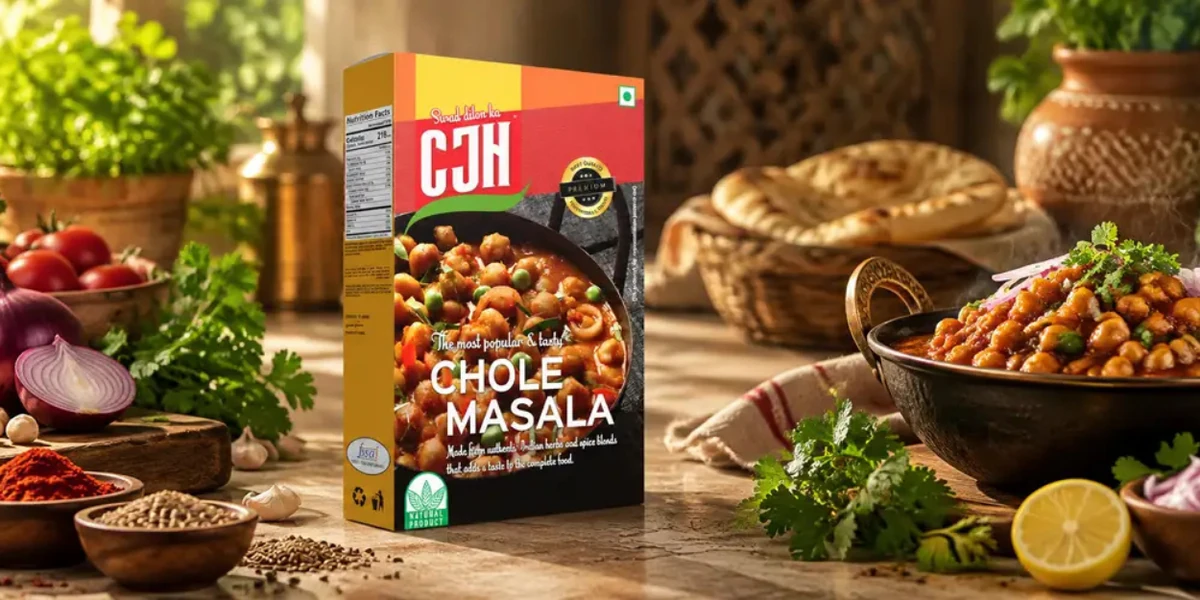
The back of a masala pouch has to carry the legal label, a recipe and often a second language, and a 100 g pouch has very little room. Plan it with real, final text before the front is signed off.
Regional Languages
A sambar powder sold in Tamil Nadu and a goda masala sold in Pune both sell better when the dish name is in the script people cook in. Many brands put the dish name in the regional script on the front with English or Hindi under it, and keep the legal details in English or Hindi. Selling in four states? Plan one artwork with a swappable language block, and get every translation checked by someone who reads that script daily.
The Recipe Panel
A short recipe is the best sales copy a blend can carry: quantities for four, five or six steps and the cooking time. It rescues the shopper holding an unfamiliar regional blend. Longer recipes can sit behind a QR code, printed large and kept off folds and seals.
Fitting the Label Panel
A blend can easily list fifteen ingredients, more if it contains salt, oil or an anti-caking agent. Give the ingredient list a narrow column of its own, set in a clean, condensed typeface (the guide to fonts for packaging helps here). Then make room for the nutrition table, the FSSAI logo and licence number, net quantity, MRP, the packing date and the expiry or use-by date grouped together, the batch number and the maker’s address. The veg mark goes on the front, near the product name. Leave a plain, light patch for the date and batch, because coding printers struggle on dark metallic film. The full list of what an Indian food label carries, as per the FSSAI labelling and display rules, is explained in the guide on why food labels are important.
FAQs: The Back of a Masala Pouch
Can a masala pouch be printed only in a regional language?
Check with a food-labelling expert before trying it. Most brands keep the legal details in English or Hindi and use the regional script for the dish name and recipe.
What should a recipe panel on a spice pack include?
The dish, quantities for a set number of people, five or six short steps and the cooking time. A QR code can link to a longer version or a video.
Where should the date and batch number go on a masala pouch?
In a plain, light patch on the back or bottom, where the packing-line printer can mark them clearly. The packing date and the expiry or use-by date sit together in one place.
How does Brij Design Studio fit two languages and the label details on a small masala pouch?
Its packaging work centres on clear information hierarchy, weighing typography, colours, imagery and illustrations against the text that has to fit. The brand supplies checked translations and legal lines, and the layout gives each one its place.
Premium vs Everyday Masala Packs: What Changes on the Pouch?
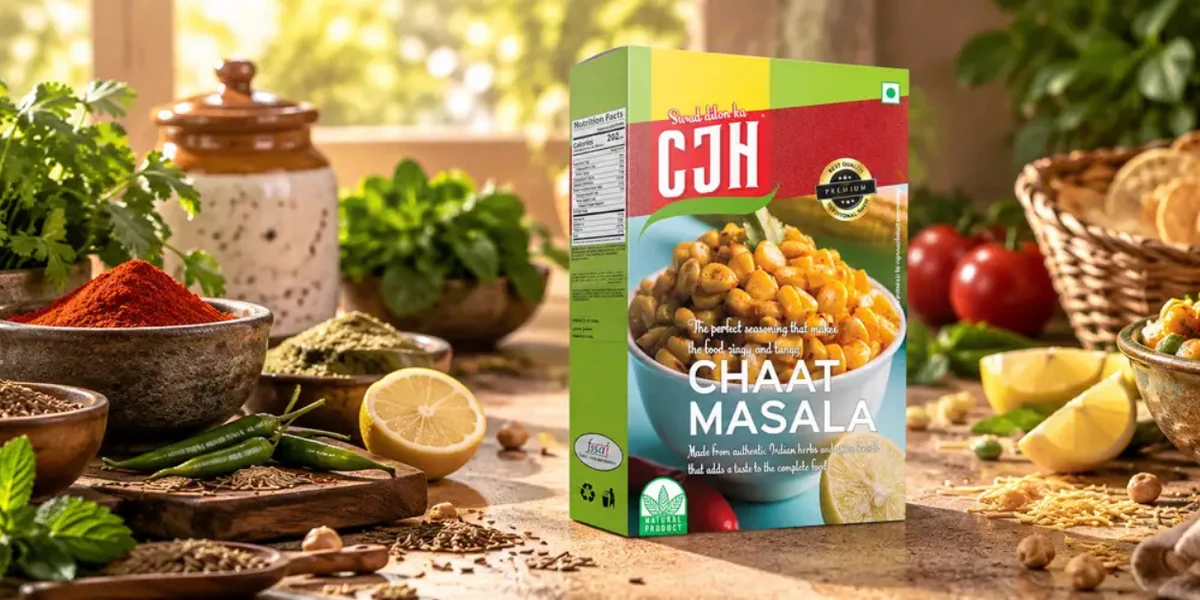
Everyday masala pouches sell on recognition, value and a loud dish photo. Premium ones sell on origin, restraint and finish. The film inside can be identical; almost everything a shopper sees changes.
The Everyday Pack
Bright gloss, a big dish photo, the dish name in two scripts, value sizes and sachet strips. It has to win in two seconds at a kirana counter lit by one tube light. Busy isn’t a mistake in this aisle. Confusing is.
The Premium Pack
Fewer words, more space. A single-origin story (Lakadong turmeric, Kashmiri chilli), a grind date, smaller packs and often a matte or paper-feel finish. Premium buyers are paying for freshness, so a printed “ground on” date does more work than gold foil.
Kraft, Glossy or Matte?
Kraft paper says natural and small-batch. Two catches: it needs a proper barrier layer inside, because paper alone holds back almost no aroma, and oil or haldi marks on it stay for good. Glossy film makes chilli red look rich and wipes clean, which is why mass brands stick with it. Matte feels calm and expensive, but dark matte picks up oily fingerprints in a kitchen. A popular middle route is matte all over with gloss only on the dish photo. Brands wanting a greener story can read the guide to sustainable packaging design before printing “recyclable” on a pouch.
FAQs: Premium vs Everyday Spice Packs
What makes spice packaging look premium?
Restraint more than decoration: fewer words, an origin story, a calm palette, a matte or paper-feel finish and a grind or harvest date.
Is kraft paper good for masala packaging?
Only with a proper barrier layer inside. Kraft by itself lets aroma and moisture through, and oil marks show on it.
Glossy or matte: which suits a masala pouch better?
Glossy suits bright, everyday ranges and wipes clean. Matte suits premium ranges but marks more easily. Matte with spot gloss on the food picture is a common mix.
Can Brij Design Studio help an everyday spice brand launch a premium line?
Its case study page includes rebrands and new product launches, and its packaging work runs from concept creation to visual execution. That covers designing a premium range that looks distinct yet still belongs to the same brand.
How a Masala Pouch Goes From Brief to Print-Ready
The usual order: range map, film and format with the pouch maker, design routes, artwork on the real dieline, a fill test with real powder, then print-ready files. The fill test is the step most often skipped.
The pouch maker confirms the film, sizes, zip position and seal widths, and shares the dieline. Two or three design routes get shown on the hero variant only. The chosen route is then built on the real dieline for every variant, with final text on the back. Then comes the spice-specific step: fill a few digitally printed samples with real masala, open and reseal them for a week, leave one near a bright light, and check the seals, zip and colours. Haldi dust in a zip shows up here, not on a screen.
At Brij Design Studio, packaging work moves through three stages named on its packaging design page: Concept, Structure and Print-ready. It runs from initial concept and structural ideation to final print output, ending with print-ready artworks and realistic 3D mock-ups. Structural design and dielines depend on the project scope, so a stock pouch size needs less structure work than a new sachet strip.
FAQs: The Masala Pouch Design Process
How long does masala pouch design take?
It depends on the number of variants, pack formats, materials and print runs. One pouch moves far faster than a twenty-variant range with sachet strips and cartons.
Who makes the dieline for a spice pouch?
Usually the pouch maker, because it depends on their machines and pouch sizes. The designer builds the artwork on it.
Why should a masala pouch be tested with real powder?
Fine spice dust behaves like nothing else. A fill test shows staining, zip clogging and weak seals before thousands of pouches are printed.
What stages does Brij Design Studio follow on a masala pouch project?
Concept, Structure and Print-ready, as listed on its packaging page, ending with print-ready artwork and realistic 3D mock-ups. How much structural work is needed depends on the project scope.
Questions to Ask Before You Approve a Masala Pouch
Check the pouch against three places: the shelf, the kitchen and the press. These questions catch most problems before the press does.
- Can a shopper find the right variant in three seconds when every pack sits side by side?
- Does the dish or spice name read from a metre away, and at phone-thumbnail size?
- Is the top band dark or patterned enough to hide a streak of haldi?
- Does the sachet artwork still work when twelve hang in a strip?
- Has someone who reads each script daily checked every translation?
- Is there a clean, light patch for the date and batch code?
- Do the colours on the proof match the real powder, not a brighter version of it?
- Has a filled pouch been shaken, opened, resealed and left in the light for a week?
- Will variant number 21 fit the system without breaking it?
FAQs: Checking a Masala Pouch Before Print
What should a spice brand check on a pouch proof?
Colour against the real spice, type sizes on the back, barcode position, the date patch, and that nothing important sits on a fold, seal or zip.
How can a brand test a masala pouch before a full print run?
Order a few digitally printed samples, fill them with real masala and use them at home for a week. Then show them to two or three kirana owners and listen.
What is a hero variant in a spice range?
The product that sells most or leads the range. It’s usually designed first, and the rest of the range follows its system.
Will Brij Design Studio hand over masala pouch files a printer can use directly?
Its packaging page promises print-ready artworks along with realistic 3D mock-ups, and its homepage says every project runs in-house, from strategy to print-ready files.
Common Masala Pouch Design Mistakes
Most masala pouch mistakes come from treating spices like any other dry food. All of them are easy to avoid while planning and painful after printing.
1A Big Clear Window on Haldi
It looks lovely on launch day. Six weeks later, the powder behind the window is paler than the rest.
2White Top Edges
Every fill leaves a little dust, and white shows all of it. A darker band at the top hides filling marks.
3Twenty Shades of Red
When every meat masala is red with a curry photo, the shopper has to read the small word “mutton” to tell them apart. Most won’t bother.
4The Brand Bigger Than the Dish
People scan the shelf for “biryani”, not for the company name. On blends, swap the sizes.
5A Sachet Drawn Like a Mini Pouch
Shrinking the 100 g artwork onto a 10 g sachet leaves text nobody can read. Sachets need their own, simpler layout.
6The Recipe That Got Cut
The back fills up with legal text and the recipe gets dropped. For a regional blend, that recipe is often what gets a new buyer to try it.
7Kraft Without a Real Barrier
The pack feels artisanal. A month later the masala smells faintly of cardboard.
FAQs: Masala Pouch Mistakes
What is the most common masala packaging mistake?
Choosing the look first and the film second. A pouch that can’t hold the aroma loses repeat buyers, however good it looks.
Why do masala packets look dirty on the shelf?
Spice dust caught at the top during filling, and pale seal areas that show every speck.
Can a brand fix a masala pouch that’s already printed?
Small artwork fixes can wait for the next print run. If the barrier is the problem, change the film before reordering, even if the artwork stays the same.
How does Brij Design Studio help spice brands avoid these pouch mistakes?
Its packaging work focuses on clear information hierarchy and consistent brand systems across SKUs, and realistic 3D mock-ups let a brand spot problems like look-alike variants before anything is printed.
Where Masala Packaging Is Heading
Masala packs are moving towards smaller premium sizes, refills, variant systems built for phone screens, and recipes that live behind a QR code. Keeping the aroma in hasn’t changed at all.
Quick-commerce apps changed how a spice gets chosen. Someone ordering ten minutes before dinner sees a stamp-sized thumbnail, so the dish name and family colour must read at that size.
Refills are growing too: a jar or tin sold once, then plainer pouches that share its colours and type. Single-material films that are easier to recycle are being tried for dry foods; for spices, check the barrier still holds aroma before switching.
And regional blends are travelling. Malvani, Chettinad and Kolhapuri masalas now sell far from home, and a blend people have never cooked needs a pack that teaches as well as sells.
FAQs: The Future of Masala Packaging
Are refill packs worth it for spice brands?
For brands that already sell a jar or tin, often yes. Buyers keep the container and come back for refills, and the refill pouch needs far less decoration.
Are recyclable pouches good enough for spices?
Some are, some aren’t yet. Ask the pouch maker for barrier test results with the actual masala before switching.
How should a masala pack look on quick-commerce apps?
The dish name and family colour have to read at stamp size. A short badge for the main claim, like “stone ground”, helps, but only when it’s true.
Does Brij Design Studio design masala packs for online stores as well as shelves?
Yes. Its packaging page talks about helping brands communicate effectively on shelves and digital platforms, so how a pouch reads as an app thumbnail is part of the work.
Why Choose Brij Design Studio for Masala Pouch Design?
Brij Design Studio is a branding and packaging design studio in Mumbai. Its packaging design page shows an Indian spices project that pairs a spice pouch with a carton box, and the same page notes the problem every growing spice range hits: many SKUs need one clear packaging system.
The work runs from concept creation to visual execution and ends in print-ready artworks and realistic 3D mock-ups. Every project runs in-house at its studio in Vile Parle (East). Rebrands, new product launches and FMCG and food branding work are on its case study page, and spice brands can reach the team through its Mumbai studio contact page.
Conclusion
A masala pouch has a harder life than most food packs. It has to hold in a smell that wants to leave, hide a dye that marks everything, keep its colour under shop lights, and still look like family at variant twenty-five.
The brands that get it right decide things in the right order: film and sizes first, then the variant system, then the photo, the languages and the back panel. The prettiest pouch on launch day isn’t always the one still selling three years later.
Get the smell to the kitchen intact, and let the shopper find the right blend in three seconds. That’s the job.
Common FAQs About Masala Pouch Design
What is the best material for a masala pouch?
For most ground spices, a laminate with a foil or metallised layer, because it blocks light, air and moisture best. Clear high-barrier films can work for fast-selling whole spices.
Why are most spice packets silver inside?
The silver is a foil or metallised layer. It keeps light out and slows aroma and moisture moving through the film.
Is a stand-up pouch better than a carton for masala?
Neither wins everywhere. Stand-up pouches are light and show the brand well. Cartons stack neatly and protect a flat pouch inside. Plenty of brands use cartons for blends and pouches for single spices.
How can a brand stop turmeric staining its packaging?
Use a darker or printed inner layer, keep the top band dark, and have the filling machine set up for fine powder so dust stays out of the seal.
What should be on the front of a masala pack?
The dish or spice name, the brand, the veg mark, the net quantity and a picture that shows what it’s for. Most of the rest can go on the back.
How many variants can one masala pouch system handle?
A well-planned one can take forty or more, as long as every new variant follows the family colours and fixed positions.
Do masala pouches need nitrogen flushing?
Not usually. Most ground spices rely on a good barrier film and a tight seal. Some oil-rich blends and premium packs use it.
Can a small spice brand start with stock pouches and labels?
Yes. A plain stock pouch with a well-designed label is a sensible start while the range and sales settle. Fully printed pouches can follow once volumes justify them.
Where can a spice brand see Brij Design Studio’s packaging work?
On its packaging design page, which includes an Indian spices pouch and carton project, and on its case study page.
Does Brij Design Studio handle a masala pouch project in-house from start to finish?
Yes. Its homepage says every project runs in-house at its studio in Vile Parle (East), from strategy to print-ready files.


