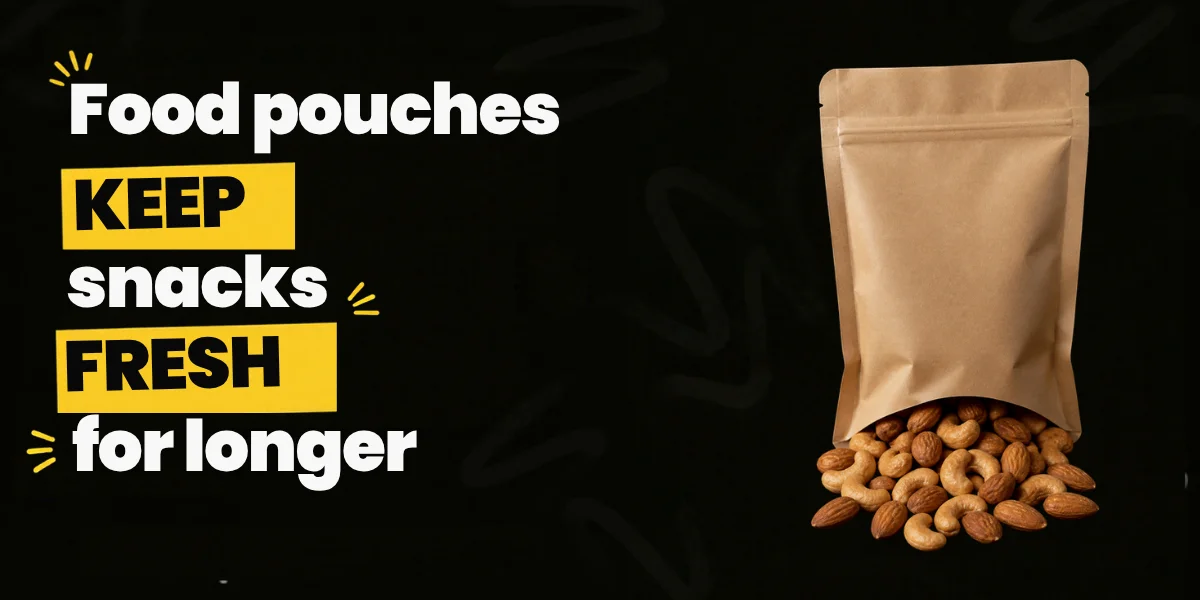
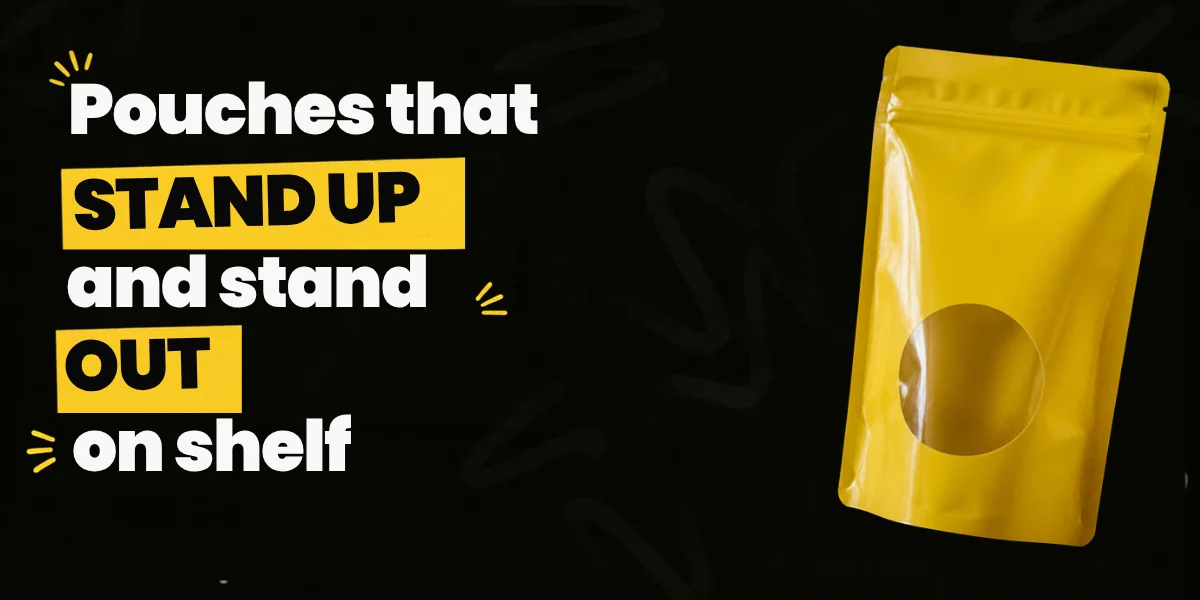
Stand up pouch packaging design has a rule that flat packs don’t: the pack must stay upright, and its artwork must still look good when it does. A Chennai coffee brand found this out when its first sample slumped sideways on the shelf, with the name sliding into the bottom fold. The coffee was fine. The pouch looked tired.
A stand up pouch is a flexible bag with a folded base that lets it stand on its own. That small fold changes everything about how it is designed: where the logo goes, how the front panel is used, what the zip does and how the pack looks half-empty.
This guide explains how a stand up pouch works, why brands choose it, the five design elements that matter most, which products suit it and what to check before ordering. Plain words, no jargon.
What Is Stand Up Pouch Packaging Design?
Stand up pouch packaging design is the planning of a pouch that stands upright on a shelf, so its shape, print, zip and information all work together. It is design for a flexible pack with a base fold, not for a flat sheet.
The pouch is made from layers of film, folded at the base and sealed on its sides. Once filled, it stands, and its front becomes a small billboard. The designer has to think in three dimensions: the front panel, the curve as it fills, and the way it looks from across the shop.
A stand up pouch is not the same as a flat or pillow pouch. The base and the standing shape give it shelf presence, but they also take away some space and bring new details such as zips, hang holes and notches.

For general rules that apply to every pouch type, read the guide to pouch packaging design, and for types, materials and print methods, the pouch designing post.
FAQs: What Is Stand Up Pouch Design?
What is a stand up pouch?
A flexible pouch with a folded base, called a gusset, that lets it stand upright when filled.
What is a doypack?
It is another name for a stand up pouch, taken from the company that first made the style popular.
Is a stand up pouch the same as a zip pouch?
Not exactly. Many stand up pouches have a zip, but the zip is an extra. The base fold is what makes it stand.
What kind of stand up pouch work does Brij Design Studio do?
Brij Design Studio designs packaging for brands, pouches included, and prepares print-ready files so the artwork suits the real pouch.
Why Do Brands Choose Stand Up Pouch Packaging Design?
Brands choose stand up pouch packaging design because the pack stands on its own, shows a large front panel, is light to ship, and can be resealed. It gives a small brand a strong shelf presence without a heavy packaging cost.
Take a trade fair in Mumbai. A snack brand sets up a table with pouches on a tiered stand. Every pouch faces forward, every front panel is visible. The brand name works like a row of small posters. A flat pack would be lying down, half-hidden.

Other reasons brands pick it:
- It stands upright in cupboards and on shelves, so it is easy to find and use.
- A resealable zip keeps food fresh after opening.
- It weighs less than jars or tins, which helps with shipping.
- Full-colour print on the front gives lots of branding space.
It isn’t perfect for everything, though. Very heavy products, sharp-edged items or those needing a rigid shape may do better in a jar, tin or box.
FAQs: Why Brands Choose Stand Up Pouches
Are stand up pouches cheaper than jars?
Often, but it depends on size, material, print and quantity. Compare real quotes for your own product.
Do stand up pouches look premium?
They can. Good print, a matt finish and a clean layout make them feel as upmarket as other formats.
Can a stand up pouch protect food as well as a jar?
With the right film structure, yes for many products. Ask your pack maker about shelf life for your food.
Which products has Brij Design Studio designed packs for?
The studio’s case studies include food, dairy and confectionery packs. You can see them on the case studies page.
How Does a Stand Up Pouch Work?
A stand up pouch works through a folded base that opens out when filled, so the front and back panels stand apart and the pouch sits upright. Extras like zips, tear notches and hang holes add function.

- Front and back panels: where the artwork lives.
- Bottom gusset: the folded base that opens to let the pouch stand. It takes up some of the lower design area.
- Side seals: heat-sealed edges on each side. Keep text away from them.
- Zip: a press-to-close strip near the top, which makes the pouch resealable.
- Tear notch: a small cut that lets people open the pouch neatly.
- Hang hole: for display on hooks, where needed.
- Window: a clear panel that shows the product.
- Spout: for liquids and pastes, a small nozzle at the top.
It helps to hold an empty pouch in your hand before designing anything. Press the base open, run a finger along the zip and look at where the seals sit. Five minutes with a real sample teaches more than any diagram, and it makes the conversation with the pack maker much easier.
Each of these parts has a physical position on the pouch, and the artwork has to be planned around them. The pack maker’s flat outline shows where each one sits.
FAQs: How Stand Up Pouches Work
Why does the bottom of my pouch design look squashed?
Because the base fold takes space and curves when filled. Keep key content higher up the pouch.
Where should the zip sit?
Near the top, below the tear notch. The pack maker sets the exact position. Keep text away from it.
Do all stand up pouches have a zip?
No. A zip is optional. It makes sense for products used more than once, and less so for single-use packs.
Can Brij Design Studio plan artwork around zips, notches and seals?
Yes. The studio prepares print-ready files in-house, built to the pack maker’s flat outline, so artwork respects every part of the pouch.
5 Design Elements for Stand Up Pouch Packaging Design
The five design elements that matter most are material, graphics, branding, resealability and eco-friendliness. Get these right and the pouch looks good, works well and suits the product.
1Material
The film decides how the pouch feels, how long food stays fresh and how colours print. A matt film feels calm, a glossy one feels bright, and a paper-look film feels natural.
2Graphics
One clear focal image or pattern, with calm space around it. Busy graphics get lost when the pouch curves.
3Branding
The brand name and logo should be large, high on the front and clear of the base fold, so they are readable from across a shop.
4Resealability
A good zip, a tear notch and a pack size that suits how much people use. The zip is part of the experience.
5Eco-Friendliness
Simple, single-material films and lighter weights are easier to recycle. Ask the pack maker what is available for your product.

How Do You Design the Front Panel of a Stand Up Pouch?
Treat the front panel as a small poster with three parts: a brand name at the top, the product name and a clear visual in the middle, and a short promise near the bottom. Keep the zip area and side edges clear.
Because the pouch bulges when filled, text near the edges curves away. Leave generous margins, and keep one idea per panel.
Where Should the Logo Sit So It Isn’t Lost in the Base Fold?
Place the logo in the upper-middle of the front panel, well above the base fold and below the zip area. That region stays flat and visible when the pouch is filled and standing. A logo set too low can be partly hidden by the fold, or look distorted when the pouch bulges. Always check a filled sample, since a pouch looks different full than flat. The guide to fonts for packaging helps with choosing type that stays readable on a curved front.
FAQs: Stand Up Pouch Design Elements
How big should the brand name be on a stand up pouch?
Large enough to read from a metre or two away. It is usually the biggest text on the front panel.
Should I use a window on my pouch?
If the product looks appealing, yes. A window builds trust, especially for nuts, dry fruit and grains.
How many colours should a stand up pouch use?
As few as the brand needs. One lead colour plus one or two supporting ones often looks cleanest.
Can Brij Design Studio design a front panel and the full pouch layout together?
Yes. The studio designs the whole pack and prepares print-ready files, so front, back and sides work as one piece.
Which Products Suit Stand Up Pouches?
Stand up pouches suit dry and semi-dry foods like snacks, coffee, tea, spices, grains and dry fruit, as well as pet food, powders and liquids with a spout. They suit products that are light, used often and sold on shelves.
- Snacks and namkeen: light, easy to open and reseal.
- Tea and coffee: need protection from air and light, and a zip to stay fresh.
- Spices and masalas: small, aromatic and used regularly.
- Dry fruit and nuts: a window shows off the product.
- Grains and pulses: larger pouches with strong film.
- Liquids and pastes: pouches with a spout, such as sauces or purees.
Heavy, sharp or fragile products may need a different format. For food-specific ideas, see the guide to food pouch design.
FAQs: Products for Stand Up Pouches
Can I use a stand up pouch for liquids?
Yes, with a spout fitted at the top. Ask your pack maker for the right film and spout.
Are stand up pouches good for heavy products?
Up to a point. Heavier products need stronger films and larger gussets. Beyond that, a jar or box may suit better.
Can I use one pouch design across different sizes?
With adjustments. Small pouches need simpler layouts, since there is less space.
Does Brij Design Studio design pouches for food brands?
Yes. The studio’s case studies include food packs, and its work runs from strategy to print-ready files.
Common Stand Up Pouch Design Mistakes
The most common mistakes are placing the logo too low, ignoring the zip and seals, using film that is too thin, crowding the front and skipping a filled sample. Each is easy to prevent.

- Logo too low. The base fold hides or bends it.
- Design over seals and zip. Text lands where the pouch is pressed or cut.
- Thin film. The pouch slumps and looks tired on the shelf.
- Wrong size. Too large for the amount inside, so it flops, or too small to stand.
- No filled sample. Designs look different when the pouch is full.
The guide to packaging design mistakes covers more errors worth avoiding.
FAQs: Stand Up Pouch Mistakes
Why does my pouch fall over?
Usually the film is too thin, the pouch is under-filled, or the gusset size doesn’t suit the weight. Ask the pack maker to adjust.
Why does my pouch look wrinkled?
Filling level, film stiffness and sealing all affect it. A sample test helps the pack maker fine-tune it.
Can I fix a pouch design after printing?
Small fixes with stickers are sometimes possible. For bigger problems, reprinting is usually needed, so testing first is cheaper.
How does Brij Design Studio help brands avoid these pouch mistakes?
By checking the layout against the real pouch outline and print conditions before files are released, so problems show up on screen and not on the shelf.
What Should You Ask Before Ordering Stand Up Pouches?
Before ordering, ask the pack maker about film structure, pouch size for your fill weight, minimum order, zip and notch options, proofs and lead time. Their answers shape the design.
- “Which pouch size holds my product weight and still stands well?”
- “Which film do you suggest for my product’s shelf life?”
- “What is the minimum order, and what are the standard sizes?”
- “Can I see a filled sample, and a printed proof?”
- “How should I send the files?”
A good pack maker answers plainly. If answers are vague, ask again or look at other suppliers.
FAQs: Ordering Stand Up Pouches
How do I choose the right pouch size?
By the weight or volume of your product. The pack maker can suggest a size that fits and stands well.
What is the minimum order for stand up pouches?
It varies by printer, size and print method, so ask before designing.
Should I order a sample first?
Yes, if you can. A filled sample shows how the design looks in real life.
Can I see how Brij Design Studio has handled packaging projects?
The case studies page shows packaging and branding projects completed by the studio.
How Does a Design Studio Design a Stand Up Pouch?
A design studio designs a stand up pouch by learning the brand and product, getting the pack maker’s flat outline, building the front panel, planning around the base fold and zip, and preparing print-ready files.
Brij Design Studio is a branding and packaging design studio in Mumbai, in Vile Parle East. Its founders, Birju and Kruti Chatwani, have worked in branding and packaging for more than 20 years, and every project runs in-house from strategy to print-ready files. For a pouch brand, that means the person who designed the front panel also checks the flat file for the printer.
More about the studio’s work is on the packaging design page.
FAQs: Working with a Studio on Pouches
What should I share with a designer to start?
The product, pouch size and type, the shopper, the sales channel and any required label text.
How many concepts will I see?
Usually a few clear directions, not a long list. Fewer, better ideas make decisions easier.
Can the same design work for several flavours?
Yes. A good system changes colour and name per flavour while the rest stays the same.
Who leads pouch projects at Brij Design Studio?
The studio is led by its founders, Birju and Kruti Chatwani, and projects run in-house from first idea to final files.
Where Is Stand Up Pouch Design Heading?
Stand up pouch design is heading towards simpler, recyclable films, cleaner fronts, easier openings and packs that read well in a small phone image as much as on a shelf.
- Single-material films that are easier to recycle.
- Cleaner fronts with fewer badges and more space.
- Refill and reuse formats, as shoppers look for less waste.
- Thumbnail-first design for quick-commerce apps.
The idea behind this shift is explained clearly by WRAP, a climate charity, in its note on the circular economy. For more on greener packs, read the guide to sustainable packaging design.
FAQs: The Future of Stand Up Pouches
Are recyclable stand up pouches available?
Some are, depending on film structure and local recycling. Ask the pack maker what is available for your product.
Will stand up pouches replace jars?
For some products, they already have. For others, jars still suit protection and feel.
Do refill pouches work for food?
They can, mainly for dry goods. The product, shelf life and food safety rules decide whether it is practical.
Does Brij Design Studio help startups with their first stand up pouch?
Yes. The studio has a guide on packaging design for startups and works with early-stage brands.
Why Choose Brij Design Studio for Stand Up Pouch Packaging Design?
Brij Design Studio is a branding and packaging design studio in Mumbai. Its founders, Birju and Kruti Chatwani, have worked in the field for more than 20 years, and every project runs in-house from strategy to print-ready files.
Pouches go wrong in the gaps between design and print. With the thinking and the final files in one place, there are fewer chances for a logo to land in the base fold.
To see the studio’s approach, visit the brand packaging services page. To start a conversation, the design studio in Mumbai page has the details.
Conclusion
A stand up pouch has to look good on its feet. That means a clear front, a logo kept clear of the fold, a zip that works and a film that holds its shape.
Work from the pack maker’s outline, keep the front simple and test a filled sample before printing.
When it stands well and reads fast, the pouch is already doing half of the selling.
Common FAQs About Stand Up Pouch Packaging Design
What are the best materials for stand up pouches?
It depends on the product and shelf life. Printers usually suggest film layers based on moisture, oxygen and light needs.
How do I design a stand up pouch?
Get the pack maker’s flat outline, build a clear front panel, plan around the zip and base fold, and test a filled sample.
What size should my stand up pouch be?
It depends on how much product it holds. The pack maker can recommend a size that fits and stands well.
Can I print on both sides?
Yes. Most pouches carry brand and visuals on the front and information on the back.
How do I make a stand up pouch look premium?
Use restrained colours, clean type, good print quality and a matt or soft-touch feel.
Do I need a barcode on my pouch?
If the product is sold in shops or online marketplaces, yes. Keep it flat, on a plain area, away from seals.
How long does it take to design a stand up pouch?
It varies with the number of flavours and feedback rounds. Printing and delivery add time.
Is a stand up pouch better than a flat pouch?
For shelf display, usually yes, since it stands and shows a large front. Flat pouches suit single servings and small portions.
How can I start a stand up pouch project with Brij Design Studio?
Share the product, pouch type and sales channel through the contact page, and the studio can take it from there.
Does Brij Design Studio design the brand behind the pouch too?
Yes. The studio offers branding design as well as packaging design, so the brand and pouch can be built together.