Brij Design Studio

Packaging of Milk and Milk Products

Packaging of milk and milk products plays a crucial role in ensuring freshness, safety, and quality from production to consumption. It protects dairy products from contamination, temperature fluctuations, and external damage while maintaining their nutritional value. Modern packaging solutions also focus on convenience, sustainability, and shelf appeal. From traditional glass bottles to advanced aseptic cartons and pouches, dairy packaging has evolved significantly. Effective packaging also supports branding and builds customer trust, making products more easily recognizable in a competitive market. Today, eco-friendly and recyclable materials are increasingly preferred to reduce environmental impact while maintaining product integrity and extending shelf life efficiently.

Milk Product Packaging Design

Milk product packaging design is essential for attracting consumers and communicating freshness, purity, and brand identity. A well-designed package not only protects the product but also influences buying decisions at the point of sale. Designers focus on color psychology, typography, and minimal yet impactful visuals to highlight quality. Packaging must also ensure functionality, such as easy pouring, sealing, and storage convenience. With growing competition in the dairy industry, innovative packaging design helps brands stand out. Sustainable materials and modern aesthetics are now key trends, ensuring both environmental responsibility and strong market appeal for dairy-based products.

Milk Pouch Design

Milk pouch design is one of the most widely used packaging formats in the dairy industry due to its cost-effectiveness and convenience. Typically made from multi-layered plastic films, milk pouches are designed to preserve freshness and prevent leakage. Their lightweight structure makes transportation and storage easier for both producers and consumers. Effective pouch design includes clear branding, nutritional information, and user-friendly sealing. Modern milk pouches are also evolving toward eco-friendly materials to reduce plastic waste. With increasing demand for hygienic and affordable dairy packaging, milk pouch design continues to play a vital role in everyday milk distribution systems.

Milk Packaging Pouch Design

Milk packaging pouch design focuses on combining functionality with visual appeal to deliver safe and attractive dairy packaging solutions. These pouches are engineered to maintain milk freshness while preventing contamination and spillage. Designers carefully select materials that ensure durability, flexibility, and food safety compliance. Branding elements such as logos, color schemes, and typography help enhance shelf visibility and consumer trust. In recent years, sustainable and biodegradable pouch materials have gained importance due to environmental concerns. A well-structured milk packaging pouch design not only improves usability but also strengthens brand identity in a highly competitive dairy market.

Milk Bottle Design

Milk bottle design blends tradition with modern innovation to provide a reliable and reusable packaging solution for dairy products. Glass and plastic bottles are commonly used, offering durability and protection against external contamination. A good milk bottle design ensures easy handling, secure sealing, and efficient storage. Transparent materials help consumers visually assess product quality, enhancing trust. Brands often use distinctive shapes, labels, and embossing to create a strong identity. With growing environmental awareness, recyclable and reusable bottle designs are becoming more popular. Milk bottle design continues to represent purity, quality, and premium positioning in the dairy industry.

Milk Carton Design

Milk carton design is widely preferred for its durability, convenience, and excellent preservation qualities. Made from layered paperboard with protective coatings, cartons help extend shelf life while maintaining milk freshness. Effective carton design combines strong structural integrity with attractive branding elements, making products stand out on retail shelves. Features like easy-pour spouts and resealable tops enhance user convenience. Designers also focus on sustainability by using recyclable materials and eco-friendly inks. Milk carton design plays a vital role in modern dairy packaging by balancing functionality, visual appeal, and environmental responsibility, making it a popular choice among both brands and consumers.

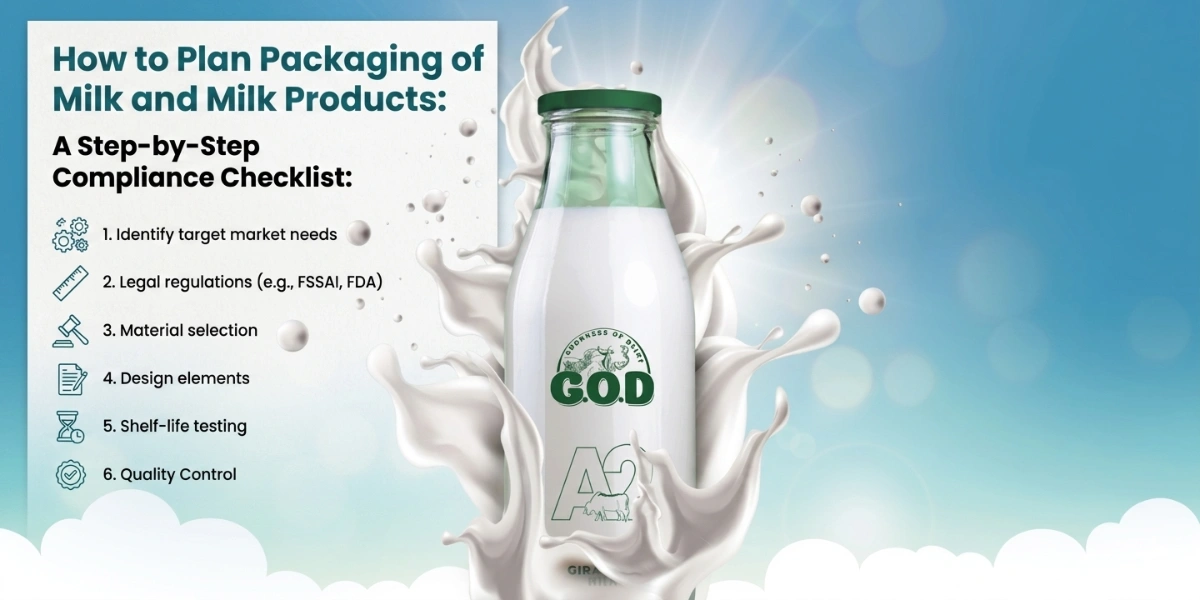
A "G.O.D." brand glass milk bottle centered against a dynamic, explosive white milk splash and sunburst background, showcasing premium liquid branding and 3D product visualization by Brij Design Studio.

How to Plan Packaging of Milk and Milk Products: A Step-by-Step Compliance Checklist

How to Plan Packaging of Milk and Milk Products: A Step-by-Step Compliance Checklist

The Packaging of Milk and Milk Products is no longer only about protecting dairy products during transportation. Today, packaging plays a major role in branding, compliance, customer trust, shelf appeal, sustainability, and even buying decisions. Whether it is fresh milk, flavored milk, cheese, yogurt, butter, paneer, ice cream, or dairy beverages, consumers judge the quality of a dairy product by its packaging before they even try it.
At Brij Design Studio, we believe that effective milk product packaging design combines creativity, compliance, functionality, and brand storytelling. A dairy product package should not only look attractive on the shelf but also maintain freshness, communicate trust, and follow industry regulations.
In this guide, we explain the complete process of planning the Packaging of Milk and Milk Products with a practical step-by-step compliance checklist that helps dairy brands create packaging that is visually appealing, legally compliant, and consumer-friendly.

Why Packaging Matters in the Dairy Industry

The dairy industry is highly competitive. Supermarkets and online grocery platforms are filled with multiple Dairy Brands competing for consumer attention. In such a crowded market, packaging becomes one of the strongest tools for differentiation.
A strong Packaging Design for Dairy Products helps brands:
1. Protect products from contamination and spoilage
2. Increase shelf life
3. Build consumer trust
4. Improve product visibility on retail shelves
5. Communicate nutritional information clearly
6. Maintain brand consistency
7. Support sustainability goals
8. Improve customer recall
For products like milk, packaging is especially critical because dairy items are temperature-sensitive and perishable. This means that every detail from material selection to sealing technology directly impacts product quality.
At Brij Design Studio, our approach to Product Packaging design focuses on balancing aesthetics with functionality so that brands can grow stronger in both retail and digital markets.
A "G.O.D." Gir Cow A2 milk bottle sitting on a rustic wooden crate in a sunny farm pasture with cows and a red barn, highlighting organic farm-to-table packaging design by Brij Design Studio.

Step 1: Understand the Dairy Product Category

Before starting any Packaging design, the first step is understanding the type of dairy product being packaged.
Different milk products require different packaging strategies.
For example:
1. Fresh milk requires leak-proof and temperature-resistant packaging
2. Cheese requires moisture-control packaging
3. Yogurt requires tamper-proof containers
4. Butter needs grease-resistant materials
5. Ice cream needs freezer-safe packaging
6. Flavored milk requires branding-focused bottle or carton designs
The Packaging of Milk and Milk Products must be tailored according to storage conditions, transportation requirements, and shelf-life expectations.
At Brij Design Studio, we study the entire product journey before creating any Packaging design concepts. This helps us understand how the product will move from manufacturing units to distributors, retailers, and finally to consumers.

Step 2: Select the Right Packaging Format

An infographic by Brij Design Studio titled "Why Packaging Matters in the Dairy Business," displaying various milk formats like pouches, glass bottles, and Tetra Paks with icons explaining brand identity and safety.
Choosing the correct packaging format is one of the most important decisions in dairy packaging.
Common dairy packaging formats include:

Milk Pouches

Flexible pouches are one of the most popular solutions for fresh milk distribution. A good milk pouch design should ensure durability, leak protection, and strong shelf visibility.

Bottles

Used for premium milk, flavored milk, and probiotic drinks. Bottles allow brands to create a premium visual identity.

Cartons

Ideal for UHT milk and long shelf-life products. Cartons help maintain freshness while offering a large branding surface.

Cups and Tubs

Commonly used for yogurt, butter, cream, and desserts.

Vacuum Packaging

Suitable for cheese and paneer products.
At Brij Design Studio, we help brands choose formats that align with their target audience, pricing strategy, logistics, and retail positioning.
The right Packaging style can significantly influence customer perception and product sales.

Step 3: Focus on Food Safety and Compliance

Compliance is one of the most critical parts of the Packaging of Milk and Milk Products.
Dairy packaging must comply with food safety regulations and labeling standards.
In India, dairy brands must follow:
1. FSSAI labeling guidelines
2. Packaging material safety standards
3. Nutritional declaration requirements
4. Batch and manufacturing information regulations
5. Storage instruction compliance
6. Expiry and best-before labeling standards
Missing even a small compliance detail can lead to penalties, product recalls, or loss of consumer trust.
A compliance-friendly milk packaging pouch design should clearly display:
1. Brand name
2. Product name
3. Net quantity
4. Manufacturing date
5. Expiry date
6. Ingredients
7. Nutritional values
8. Storage instructions
9. FSSAI license number
10. Customer care information
At Brij Design Studio, we ensure every Packaging Design for Dairy Products follows compliance standards while maintaining an attractive visual identity.

Step 4: Create a Strong Visual Identity

A comprehensive dairy packaging guide by Brij Design Studio showing various formats, including gable-top cartons and spout pouches, featuring a "How to Choose" section based on budget and sustainability.
Consumers often make purchasing decisions within seconds. This is why visual storytelling is essential in dairy packaging.
The best Packaging design concepts are those that instantly communicate freshness, purity, hygiene, and trust.
For dairy packaging, important visual elements include:
1. Clean typography
2. Fresh color palettes
3. High-quality imagery
4. Minimal yet informative layouts
5. Easy-to-read nutritional information
6. Consistent brand identity
For example:
1. Blue and white tones are commonly associated with freshness and milk purity
2. Green shades communicate organic or farm-fresh positioning
3. Gold accents may indicate premium dairy products
At Brij Design Studio, we develop milk product packaging design systems that help dairy brands build a memorable shelf presence while maintaining clarity and simplicity.
A well-designed package not only attracts buyers but also increases brand recall and customer loyalty.

Step 5: Choose Durable and Sustainable Materials

A green-themed infographic by Brij Design Studio titled "Step 5: Choose Durable and Sustainable Materials," illustrating eco-friendly dairy packaging options like paperboard cartons and biodegradable materials.
Modern consumers care about sustainability. Today, eco-conscious packaging can significantly improve brand perception.
When planning the Packaging of Milk and Milk Products, brands should evaluate:
1. Recyclability
2. Material durability
3. Barrier protection
4. Environmental impact
5. Cost efficiency
6. Transportation efficiency
Popular materials in dairy packaging include:
1. LDPE films for milk pouches
2. PET bottles for beverages
3. Tetra packs for long-life milk
4. Paperboard cartons
5. Recyclable plastics
6. Biodegradable packaging materials
Sustainability is becoming an important factor in Packaging design decisions.
At Brij Design Studio, we help brands explore modern sustainable packaging options without compromising product safety or shelf appeal.
Our goal is to create Dairy product packaging that supports both business growth and environmental responsibility.

Step 6: Optimize Packaging for Retail Shelves

A high-contrast retail display shot by Brij Design Studio featuring milk pouches and bottles with condensation and ice, demonstrating how bold typography and packaging design remain visually attractive in cold storage.
Retail visibility is one of the biggest goals of effective dairy packaging.
Whether products are placed in supermarket refrigerators, kirana stores, or online grocery platforms, packaging should stand out immediately.
A strong Product Packaging design strategy considers:
1. Shelf visibility
2. Readability from distance
3. Brand recognition
4. Product differentiation
5. SKU hierarchy
6. Consumer convenience
For example, a good milk pouch design should:
1. Have clear branding even when stacked
2. Use bold typography
3. Remain visually attractive despite condensation
4. Be easy to store and carry
At Brij Design Studio, we design packaging systems that perform effectively in real retail environments.
We focus on consumer behavior, shopping psychology, and shelf competition while developing Packaging design concepts.

Step 7: Ensure Practical Functionality

Good dairy packaging should not only look beautiful but also function effectively.
Consumers expect convenience.
Functional considerations for the Packaging of Milk and Milk Products include:
1. Easy opening
2. Secure sealing
3. Spill resistance
4. Leak protection
5. Easy pouring
6. Refrigeration compatibility
7. Durability during transportation
For premium dairy products, resealable packaging can improve customer satisfaction.
At Brij Design Studio, we ensure that every Packaging style combines usability with strong visual communication.
Packaging should simplify the consumer experience rather than create frustration.

Step 8: Test the Packaging Before Launch

Packaging testing is a crucial step that many brands overlook.
Before launching any dairy product, packaging should be tested for:
1. Leakage
2. Compression resistance
3. Temperature performance
4. Transportation durability
5. Shelf appearance
6. Consumer usability
7. Print quality
8. Color consistency
Testing helps brands avoid costly errors after production.
At Brij Design Studio, we recommend prototype testing and mockup evaluations before finalizing any milk packaging pouch design.
This process helps brands identify improvements early and ensures packaging performs effectively in real-world conditions.

Step 9: Maintain Brand Consistency Across Products

Many dairy brands offer multiple products including milk, yogurt, butter, cheese, and flavored beverages.
A consistent packaging identity helps consumers recognize the brand easily.
Strong Packaging Design for Dairy Products should create a unified visual system while allowing each product category to have its own identity.
This can include:
1. Consistent logo placement
2. Similar typography
3. Standardized color systems
4. Product-specific variations
5. Uniform layout structures
At Brij Design Studio, we create scalable Packaging design systems that support brand growth across multiple dairy product lines.
Consistency builds familiarity, trust, and stronger customer retention.

Step 10: Plan Packaging for Digital and Quick Commerce Platforms

Today, many consumers buy dairy products through online grocery apps and quick commerce platforms.
This means packaging must perform not only on physical shelves but also on mobile screens.
Modern Dairy product packaging should:
1. Look visually appealing in thumbnails
2. Communicate information clearly online
3. Use strong color contrast
4. Have recognizable branding
5. Stand out in crowded app interfaces
At Brij Design Studio, we design packaging that works effectively across both offline and online retail channels.
Our approach to milk product packaging design focuses on creating a complete consumer experience across all touchpoints.

How Brij Design Studio Helps Dairy Brands Build Better Packaging

At Brij Design Studio, we understand that dairy packaging requires more than just attractive graphics.
Our process combines:
1. Market research
2. Consumer behavior analysis
3. Compliance planning
4. Creative branding
5. Structural packaging development
6. Retail strategy
7. Sustainable packaging solutions
8. Visual storytelling
We work closely with Dairy Brands to create impactful packaging that improves shelf visibility, customer trust, and long-term brand recognition.
Whether it is a startup dairy company or an established milk brand, our team develops customized Packaging design concepts that align with business goals and consumer expectations.
From milk pouch design to premium dairy packaging systems, we focus on creating packaging that is functional, compliant, and visually memorable.

Final Thoughts

The Packaging of Milk and Milk Products plays a critical role in product safety, branding, consumer trust, and market success.
Successful dairy packaging is not just about appearance. It requires a combination of compliance, material selection, functionality, sustainability, and strategic branding.
As competition in the dairy industry continues to grow, brands need packaging that not only protects products but also builds emotional connections with consumers.
At Brij Design Studio, we specialize in creating innovative Packaging Design for Dairy Products that balances creativity with performance.
From compliance-friendly milk packaging pouch design to premium Product Packaging design systems, our goal is to help dairy brands stand out in a competitive market while delivering a seamless consumer experience.
If your brand is planning the next generation of Dairy product packaging, investing in strategic and consumer-focused packaging design can become one of the strongest drivers of long-term growth and recognition.

FAQ's

The Packaging of Milk and Milk Products is important because it protects dairy products from contamination, maintains freshness, increases shelf life, and helps brands build consumer trust. Good packaging also improves product visibility on retail shelves and supports branding and compliance requirements.

When planning milk product packaging design, brands should consider:

  1. Food safety compliance
  2. Packaging material quality
  3. Shelf life requirements
  4. Consumer convenience
  5. Sustainability
  6. Branding and shelf visibility
  7. Transportation durability
  8. Storage conditions

A successful packaging solution balances functionality with strong visual communication.

A well-planned milk pouch design helps dairy brands improve product visibility, prevent leakage, maintain freshness, and create better customer recall. Since milk pouches are widely used in the dairy industry, packaging design plays a major role in differentiating one brand from another.

An effective milk packaging pouch design should include:

  1. Strong sealing and leak protection
  2. Clear branding
  3. Easy-to-read product information
  4. Compliance-friendly labeling
  5. Attractive visual identity
  6. Durable and food-safe materials

The design should also remain visually appealing even in refrigerated conditions.

Good Packaging Design for Dairy Products attracts consumer attention, improves shelf presence, and creates trust. Packaging often influences buying decisions within seconds, especially in supermarkets where multiple dairy products compete side by side.

Strong packaging design can:

  1. Increase product recognition
  2. Improve brand recall
  3. Build emotional connection
  4. Communicate quality and freshness

Common materials used in Dairy product packaging include:

  1. LDPE films for milk pouches
  2. PET bottles
  3. Tetra packs
  4. Paperboard cartons
  5. Recyclable plastics
  6. Biodegradable packaging materials

The choice of material depends on the dairy product category, storage conditions, and shelf-life requirements.

Strong Packaging design concepts help dairy brands communicate their identity clearly. A good concept combines colors, typography, imagery, layout, and functionality to create packaging that stands out in competitive retail environments.

Creative concepts also help consumers instantly understand:

  1. Product type
  2. Brand positioning
  3. Freshness
  4. Premium quality
  5. Organic or healthy attributes

Effective Packaging design acts as a silent salesperson for dairy brands. It helps products stand out on shelves, creates brand recognition, and builds customer trust through consistent visual communication.

For many consumers, packaging is the first interaction they have with a dairy brand.

Most successful Dairy Brands use a consistent packaging system across all products. This includes:

  1. Similar logo placement
  2. Consistent typography
  3. Unified color schemes
  4. Standard layout structures

Consistency helps customers recognize the brand quickly across milk, yogurt, cheese, butter, and flavored dairy products.

Modern Product Packaging design trends in the dairy industry include:

  1. Sustainable packaging materials
  2. Minimalist packaging styles
  3. Eco-friendly printing
  4. Smart labeling
  5. Transparent packaging
  6. Premium visual aesthetics
  7. Convenience-focused packaging formats

Brands are also focusing more on digital-friendly packaging that performs well on online grocery platforms.

The right Packaging style can strongly influence customer perception. Clean, modern, and premium-looking packaging often creates a sense of trust and quality.

In the dairy industry, consumers are naturally drawn toward packaging that communicates:

  1. Freshness
  2. Hygiene
  3. Purity
  4. Nutrition
  5. Reliability

This is why packaging design is considered one of the most important investments for dairy businesses.

Brij Design Studio helps dairy businesses create strategic and visually impactful packaging solutions. Their process includes:

  1. Market research
  2. Packaging strategy
  3. Compliance-focused design
  4. Creative branding
  5. Structural packaging development
  6. Retail shelf optimization
  7. Sustainable packaging solutions

The studio focuses on creating dairy packaging that is functional, compliant, and memorable for consumers.